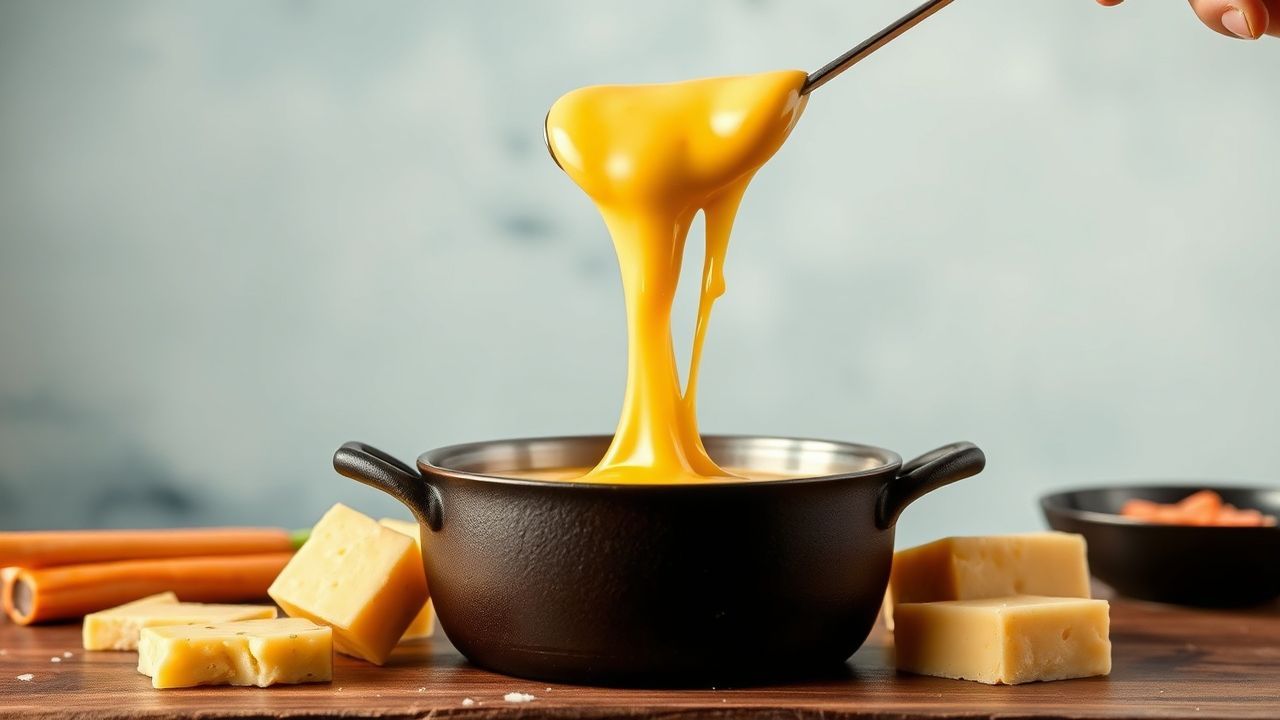

There is something irresistible about molten cheese pooled in a pot that draws people together. This guide, Melt Magic, breaks the technique into clear steps so you can make reliable, silky cheese fondue at home.
- Balance cheeses: combine melting and flavor traits for smoothness.
- Control heat: low and steady prevents separation and graininess.
- Use acid & starch: wine or lemon plus cornstarch stabilizes the emulsion.
- Set a spread: varied dippers keep guests dipping and conversations flowing.
Choosing the Perfect Cheeses for Silky Smooth Fondue
Start with cheeses that melt predictably. Classic Swiss-style cheeses give you both the stretch and the savory depth that define great fondue. For a nutty backbone, choose Gruyère as one of your base cheeses.
Pair the Gruyère with a milder, elastic cheese to smooth the texture. Emmental supplies buttery stretch, while a small portion of Comté adds complexity without breaking the melt.
Mastering the Art of the Ideal Fondue Texture
Texture hinges on three variables: temperature, acid, and stabilizer. Keep heat low and slow; aggressive heat tightens protein bonds and forces oil to separate.
Add a touch of acid—dry white wine or lemon juice—to help proteins reach a stable emulsion. Use cornstarch as a binder; it absorbs free oil and gives the fondue a clingy, spoon-coating finish. See cornstarch for its thickening properties.
Acid and Stabilizers
Acid molecules disrupt protein networks and keep the emulsion smooth. One tablespoon of lemon juice or two-thirds of a cup of dry white wine per pound of cheese is a practical starting point.
Coat grated cheese with cornstarch (or tapioca starch for extra stretch). That dusting reduces grit and helps the melted mass cling to bread and vegetables.
Technique: Slow Melt and Constant Motion
Warm the wine first until it shivers, then add the cheese incrementally while stirring in a steady figure-eight. Use a wooden spoon or silicone spatula to avoid scratching a pot and to encourage gentle folding.
If the fondue tightens or splits, whisk in a tablespoon of warm wine or water to coax the proteins back into suspension. Keep the heat at the lowest practical setting once you reach a glossy texture.
Essential Tips for Fondue Pot Selection and Maintenance
Pick a pot built for even heat distribution. Ceramic or enameled cast-iron pots work well on a table burner because they hold gentle heat and avoid hot spots that scorch cheese.
Match the pot to your heat source. If you use a fuel canister, ensure the pot base sits level and has enough capacity so the cheese can circulate without crowding.
Clean your pot while it is still warm with hot water and a soft sponge. For stubborn residue, soak briefly; avoid metal scouring pads on enameled surfaces to prevent chipping.
Creative Dippers and Flavor Pairings to Elevate Your Experience
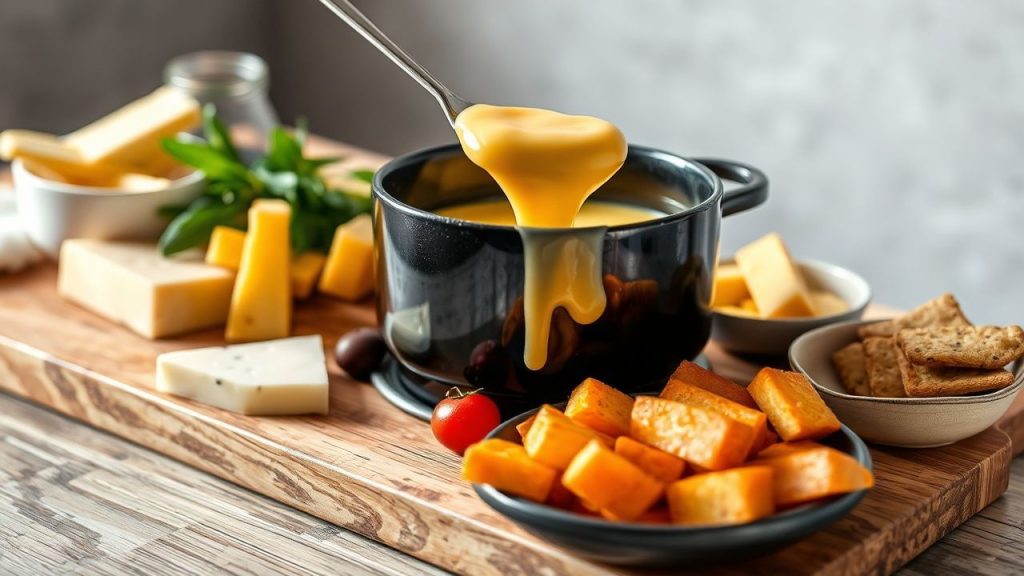
Assemble a variety of textures and flavors to keep the tasting interesting. Cubes of crusty bread, blanched vegetables, roasted baby potatoes, and apple or pear slices hit different taste receptors and textures.
Mix in cured meats and roasted nuts for protein and crunch, and provide fresh herbs and cracked pepper for bursts of aroma. For detailed bread options see our internal guide on fondue dipping bread recipes.
Wine and Spirits
Use a dry white wine for both flavor and acid balance. If you prefer a hint of fruit and lift, stir in a splash of kirsch (cherry brandy). Learn pairing ideas at our internal resource on best wine pairings.
For a non-alcoholic route, use a low-acid white grape or apple cider diluted with water to maintain the acid-stabilizer balance without alcohol.
Recipe: Prep, Time, Yield, Ingredients & Instructions
Prep: 15 minutes. Cook: 10 minutes. Total: 25 minutes. Serves 4–6 people. This timeline assumes you grate cheeses and measure ingredients before heating.
Difficulty rates as medium because temperature control and steady stirring determine success. Follow the ingredient ratios and step order to avoid splitting the sauce.
Ingredients
- 1 cup Gruyère cheese, grated
- 1 cup Emmental cheese, grated
- 1/2 cup Comté cheese, grated
- 1 garlic clove, halved
- 1 cup dry white wine
- 1 tsp lemon juice
- 2 tsp cornstarch
- 1 tbsp kirsch (optional)
- Freshly ground black pepper and pinch of nutmeg
Instructions
- Rub the inside of your fondue pot with the halved garlic for aroma. Remove or leave the garlic depending on desired intensity.
- Toss grated cheeses with cornstarch to coat evenly; this prevents clumps.
- Warm the wine and lemon juice in the pot until it shivers, not boiling.
- Add cheese gradually, stirring in a steady figure-eight until fully melted and glossy.
- Stir in kirsch and season with pepper and nutmeg. If the fondue seizes, whisk in a tablespoon of warm wine or water.
- Keep the pot at table temperature over a low burner and stir occasionally to maintain a uniform texture.
Chef’s Notes & Tips for Success
Grate the cheese cold and store it briefly in the refrigerator after tossing with starch. Cold cheese melds more predictably and reduces the chance of oily separation.
For gluten-free guests, provide rice crackers, blanched vegetables, or roasted tubers instead of bread. To vary the flavor, swap a small portion of the Swiss base with aged cheddar or raclette for sharper notes.
Serving Suggestions
Arrange dippers on rustic boards and keep small plates for guests to rotate. Garnish the pot rim or platters with fresh herbs to add color and lift the rich flavors.
Pair the fondue with a crisp green salad dressed simply with lemon vinaigrette to cut the richness. For pot care and storage tips refer to our internal guide on fondue pot care.
| Nutritional Information (Per Serving) | Calories | Protein (g) | Carbohydrates (g) | Fat (g) |
|---|---|---|---|---|
| Cheese Fondue | 370 | 18 | 4 | 30 |
FAQ
How do I stop my fondue from becoming grainy?
Graininess often comes from overheating or adding cheese too fast. Keep the heat low, add cheese in small batches, and stir constantly in a gentle figure-eight.
Can I substitute wine with non-alcoholic liquids?
Yes. Use low-acid white grape juice or diluted apple cider with a little lemon to maintain acidity. Adjust salt and seasoning to taste.
How long can I keep leftover fondue?
Store leftovers in an airtight container in the refrigerator for up to two days. Reheat gently over low heat and thin with warm wine, milk, or water to restore creaminess.
What is the best way to serve fondue at a dinner party?
Set the fondue pot centrally on a low burner, arrange dippers on boards, and provide small forks so guests can rotate foods and keep portions tidy.
Are there vegan fondue options that mimic texture?
Plant-based blends using cashews, tapioca starch, and nutritional yeast can create a gooey, savory alternative. Test ratios ahead of your event to ensure the texture meets expectations.
For reference on the dish and its history, consult the encyclopedia’s article on fondue. For ingredient specifics, read about Gruyère, Emmental, and kirsch to deepen your understanding of traditional components.
Now you have a compact, tested path to melt magic—mix the right cheeses, respect the heat, and set a lively dipping spread. That combination produces reliably silky fondue that keeps guests returning for more.
See also: cheese fondue