
Mushroom Magic: Crafting Delicious Vegan Jerky at Home
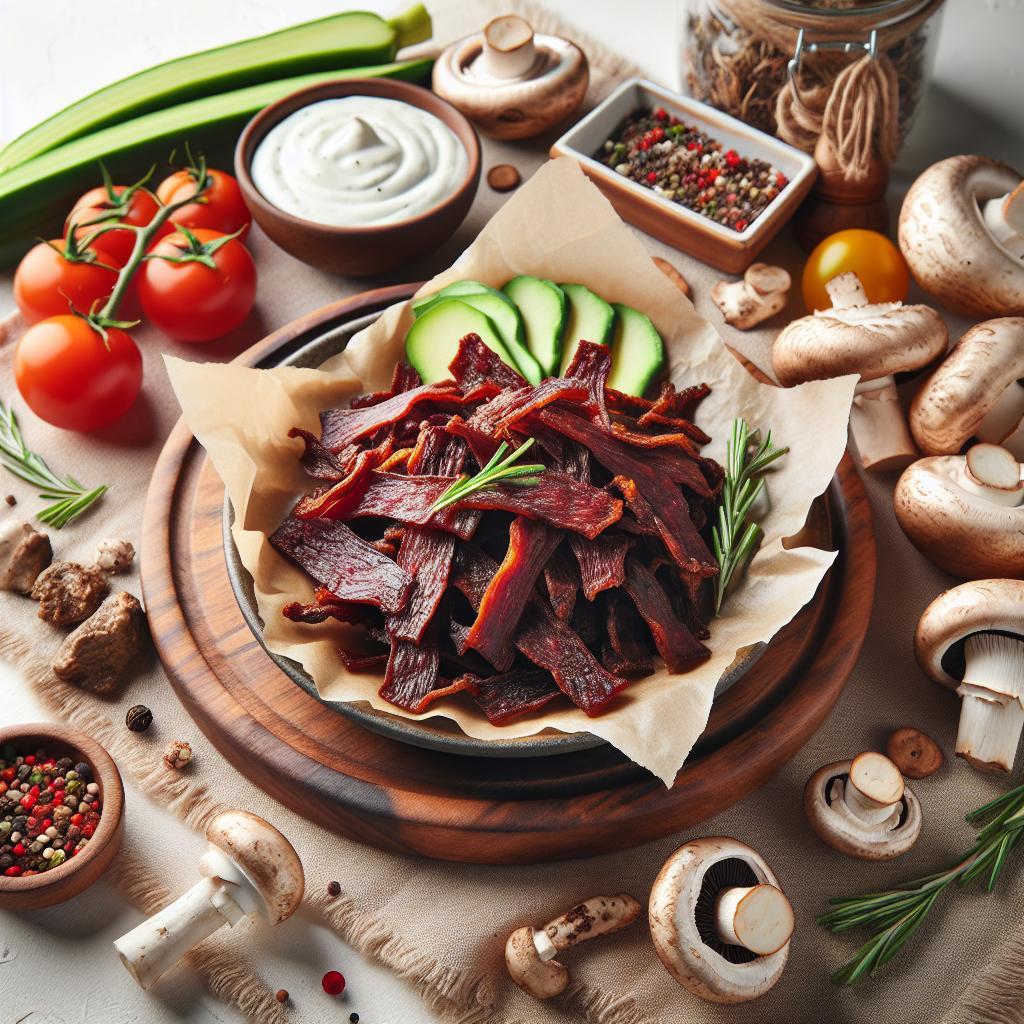
Mushrooms deliver a naturally meaty texture and deep umami that make them an ideal base for homemade vegan jerky. With the right mushrooms, a balanced marinade, and controlled drying, you can produce strips that are smoky, chewy, and satisfying.
- Choose dense mushrooms for chew; shiitake and king oyster are standout options.
- Marinate long to let flavors penetrate—aim for 6–12 hours for best depth.
- Dry low and slow to reach a leathery, pliable texture without brittleness.
- Store properly to preserve texture: airtight, refrigerated, or frozen for long-term.
Why Mushrooms Work for Jerky
Mushrooms contain fibrous cell walls and a natural ability to trap marinades, which mimics the chew of traditional jerky. Their savory profile also amplifies smoke and spice, producing a snack with authentic jerky characteristics.
For background on fungal anatomy and common edible species, see mushroom. That cellular structure is what gives many varieties a satisfying bite after drying.
Prep and Cook Time
Preparation: 15 minutes. Marinating: 6–8 hours (or overnight). Drying: 6–8 hours depending on thickness.
These times assume 1/4-inch slices and a food dehydrator set at recommended temps. Oven drying takes longer and needs close monitoring to avoid over-drying.
Yield
This recipe yields about four servings of concentrated, savory jerky strips from 12 ounces of fresh mushrooms. Yield varies by mushroom moisture content and drying time.
If you start with very wet mushrooms, you will lose more weight during dehydration and end up with smaller volume; dense varieties like king oyster retain more chew and make larger pieces.
Difficulty Level
Medium. The technique trades labor for precision: even slicing, balanced marinade, and patient drying make the difference. The process rewards attention rather than experience.
Beginners can succeed by focusing on consistent slice thickness and checking texture periodically during drying. Use a digital thermometer for the oven or dehydrator if available.
Ingredients
12 oz mixed mushrooms (crimini, shiitake with stems removed, and king oyster sliced lengthwise). 1/4 cup soy sauce or tamari, 2 tbsp liquid smoke, 1 tbsp maple syrup, 1 tbsp apple cider vinegar.
Seasonings: smoked paprika, garlic powder, onion powder, cracked black pepper, optional cayenne, and 1 tbsp olive or sesame oil. Adjust salt and heat to taste.
For more about specific species used here, reference shiitake and king oyster mushroom descriptions which explain texture and flavor differences.
Instructions
1. Prepare the Mushrooms
Gently clean mushrooms with a damp cloth—avoid rinsing under water to limit added moisture. Slice crimini and shiitake to roughly 1/4 inch and split king oyster lengthwise for a fibrous strip that holds up when dried.
Consistent slice thickness ensures even drying. If slices vary, rotate trays during dehydration and check thinner pieces earlier to prevent crisping.
2. Make the Marinade
Whisk soy or tamari, liquid smoke, maple syrup, apple cider vinegar, smoked paprika, garlic powder, onion powder, cracked black pepper, and cayenne if using. Finish with a tablespoon of oil to help distribute fat-soluble aromas.
Taste the marinade before adding mushrooms. Because mushrooms absorb so well, the marinade should be slightly stronger than the final flavor you want.
3. Marinate
Submerge mushroom strips and toss to coat. Cover and refrigerate for 6–8 hours, or overnight for deeper penetration. Stir once or twice to ensure even exposure.
If you have limited time, a 2–3 hour marinade at room temperature will still infuse flavor, but texture and depth will be less pronounced compared with extended marination.
4. Preheat and Arrange
Preheat your dehydrator to around 135°F. If you use an oven, choose the lowest setting (aim for 140–170°F) and prop the door open slightly for airflow. Lay strips in a single layer on trays without overlap.
Good airflow prevents steaming and promotes even drying. For oven use, add a fan or rotate racks periodically; for a dehydrator, use the recommended spacing in the manual.
5. Dehydrate
Dry for 6–8 hours, checking after four hours. The ideal texture is leathery and pliable, not brittle or crumbly. Remove pieces that reach correct texture earlier to avoid over-drying the batch.
Understanding moisture content helps: overly wet batches take longer and may need a brief burst at slightly higher temperature to finish, while thin slices will finish sooner and crisp up if left too long.
6. Cool and Store
Cool jerky fully on racks to let residual heat equalize and prevent trapped moisture. Once cool, pack in airtight containers or vacuum-sealed bags for best shelf stability.
Store at room temperature for short-term use, refrigerate to extend freshness, or freeze in portions for several months. Always label with date and note texture on opening.
Chef’s Notes
Use combinations of mushrooms to create layered texture: crimini for depth, shiitake for umami, king oyster for chew. Slice direction matters—cut against fibers for a tender bite, with fibers for more chew.
Swap soy for coconut aminos to reduce sodium and provide a different sweetness profile. For extra smoke, steep a small amount of lapsang souchong tea in the warm marinade and strain it out before adding mushrooms.
For troubleshooting, if jerky becomes too tough, reduce drying time by 15–30 minutes on the next batch and aim for slightly more pliability. Conversely, extend drying in 15-minute increments to firm up softer pieces.
Learn more about mushroom nutrition and varieties on our internal resource Mushroom Nutrition, and pair jerky with other bites in The Ultimate Guide to Vegan Snacks for balanced snack planning.
Serving Suggestions
Serve jerky as a hiking snack, party nibble, or salad topper. Garnish with chopped parsley, toasted sesame seeds, or a sprinkle of nutritional yeast for a cheesy umami hit.
Mix torn jerky into grain bowls or plant-based sandwiches to add chew and concentrated flavor. Pair with pickles or tangy dips to balance savory depth.
Nutrition Information per Serving
Estimated values: approximately 120 calories, 5 g protein, 10 g carbs, and 4 g fat per serving. Exact values depend on mushrooms, marinade absorption, and portion size.
Mushroom-based jerky is typically lower in saturated fat and cholesterol-free, supplying B vitamins, fiber, and antioxidants. For a primer on umami and taste perception, see umami.
Creative Seasoning Blends to Customize Your Jerky Experience
Try a Moroccan blend with ground cumin, coriander, and a pinch of cinnamon for warmth. Or go Korean-style with gochujang paste thinned with a little water and toasted sesame seeds for a sticky, savory glaze.
For Mediterranean notes, add dried rosemary and thyme; for Southwest flavor, use chili powder, smoked salt, and a splash of lime. Small tweaks in acid, sweet, and smoke change the jerky profile dramatically.
Technique Notes: Dehydration Science
Food dehydration removes free water to a level that inhibits microbial growth while concentrating flavor and altering texture. Controlled drying reduces water activity without cooking the product to brittleness.
Refer to standard drying methods at food dehydration for safety thresholds and best practices if you plan frequent home drying.
Q&A
Q&A: Mushroom Magic – Crafting Delicious Vegan Jerky at Home
Q1: What makes mushrooms a great base for homemade vegan jerky?
They offer fibrous texture and strong umami, enabling them to mimic meat-like chew and absorb marinades deeply. The result is a concentrated savory bite that resembles jerky more than other plant bases.
Mushroom cell structure enables marinade retention, which is why longer marination times significantly improve flavor throughout the strip.
Q2: Can any mushroom variety be used, or are some better than others?
Many mushrooms work, but king oyster, shiitake, portobello, and maitake are preferred for jerky due to texture and flavor. Dense species hold up to drying and maintain chew.
To compare species, see the entry for shiitake at shiitake, which explains how its flavor profile changes with cooking and drying.
Q3: What’s the best method to dry vegan mushroom jerky at home?
A food dehydrator provides the most consistent results for low-temperature drying and airflow control. If you use an oven, keep it low and the door cracked, and check often to prevent over-drying.
Dehydrators typically run around 125–140°F for plant-based jerky. Follow manufacturer guidance and test one or two strips early to set the ideal finish time.
Q4: How do you tell when mushroom jerky is perfectly done?
Done jerky feels leathery, flexible, and not sticky. It should bend without snapping and tear with some resistance, retaining moisture without softness.
Testing a sample after four hours and every 30–60 minutes thereafter helps you hit that sweet spot consistently across batches.
Q5: How long does homemade mushroom jerky keep, and how should it be stored?
When fully dry and cooled, store in airtight containers for up to two weeks at room temperature. Refrigeration extends life to about a month, while freezing preserves it for several months.
Vacuum sealing improves shelf stability by removing air; always ensure pieces are dry before long-term storage to prevent mold or off-flavors.
Final Thoughts
Turning mushrooms into jerky highlights the ingredients’ structural and flavor potential. With consistent slicing, a robust marinade, and patient drying, you can produce snackable, savory strips that satisfy similar cravings to meat jerky.
Experiment with mushroom blends, seasoning profiles, and storage approaches to refine texture and flavor toward your ideal jerky. Home experimentation yields the best, most personalized results.
See also: mushroom jerky