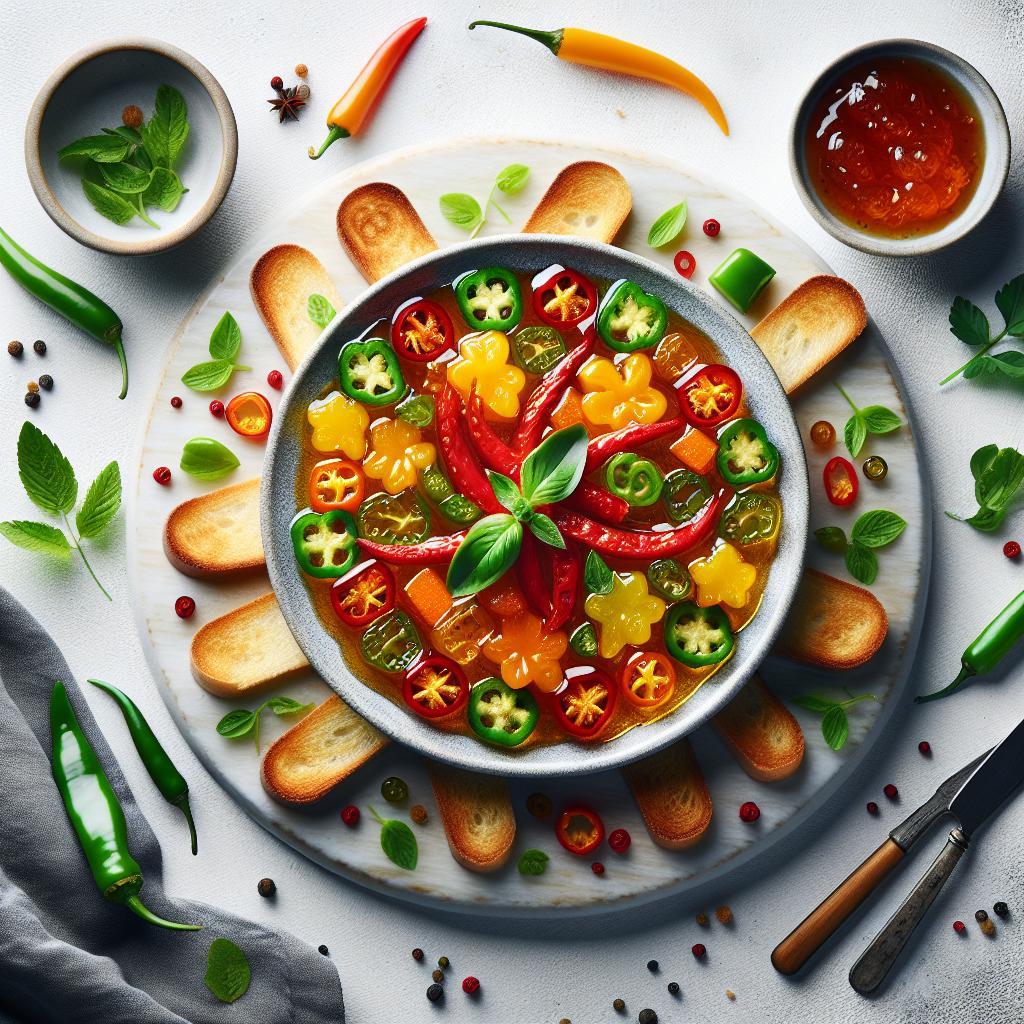

Pepper jelly pairs bright acidity with concentrated sugar and capsaicin-driven heat to create a glossy, versatile preserve. This guide explains practical steps, safe canning, and serving ideas so you can make consistent, shelf-stable jars that sing.
- Balance: Sweetness, acid, and heat must each play a clear role.
- Technique: Proper boiling and pectin use ensure the ideal set.
- Safety: Correct jar processing preserves flavor and shelf life.
- Use: Pepper jelly works as a glaze, spread, or secret sauce ingredient.
Prep and Cook Time
Preparation: 15 minutes. Gather peppers, vinegar, sugar, pectin, and jars before you start to keep the workflow tight and safe.
Cooking: 20 minutes. The active boiling and setting stage moves fast, so stay attentive and use a wide, heavy-bottomed pan to reduce scorching.
Yield and Storage
This recipe yields approximately three half-pint jars (about 24 ounces total). The quantity depends on pepper density and evaporation during boiling.
Unopened jars, when processed correctly, keep up to one year in a cool, dark pantry; after opening, refrigerate and use within a month. For background on safe home canning practices, see canning (food preservation).
Essential Ingredients for Balancing Heat and Sweetness
Successful pepper jelly uses a short ingredient list with clear roles: peppers supply capsaicinoids for heat, vinegar brings acidity, sugar provides structure and shelf life, and pectin sets the gel. Use fresh ingredients for the cleanest flavors.
Below is a practical ingredient list you can follow or scale. Adjust pepper types and proportions to control color and heat intensity.
- 1½ cups finely chopped hot peppers (jalapeños recommended; mix red and green for color)
- 3 cups granulated sugar
- 1½ cups apple cider vinegar (for brightness and acid)
- 1 pouch (1.75 oz) liquid fruit pectin — use as directed for consistent setting; learn more about pectin and how it works.
- ¼ teaspoon salt (to balance flavor)
- Optional: 1 teaspoon garlic powder or 1 clove minced garlic for savory depth
Step by Step Guide to Crafting Classic Hot Pepper Jelly
Follow these steps in order to maintain texture and safety. I emphasize temperature and timing because both determine whether the jar holds a glossy set or becomes a syrup.
Work clean, measure precisely, and use a reliable thermometer if you need extra assurance during the boiling phase.
Preparing Peppers
Wear gloves while handling hot peppers to avoid skin or eye irritation. Chop peppers uniformly to ensure even softening and consistent distribution in the jar.
If you want milder jelly, remove most seeds and membranes; leave them in for more heat. Remember that dried seeds sometimes hold more heat, but fresh membranes concentrate capsaicin.
Cooking and Setting the Jelly
Combine chopped peppers and vinegar in a medium saucepan and simmer gently for about five minutes to soften. Then add sugar and salt; stir until fully dissolved to prevent grainy texture.
Quickly add liquid pectin and return to a vigorous, rolling boil. Boil for 1–2 minutes to activate pectin properly. This rapid boil forms the gel network that gives pepper jelly its characteristic set.
Canning and Shelf Stability
Spoon the hot jelly into sterilized jars, leaving 1/4-inch headspace, then seal with lids and bands. Process jars in a boiling water bath for 10 minutes to ensure safe preservation and long-term stability.
After processing, cool jars on a rack and listen for the pop of a sealing lid. If a jar fails to seal, refrigerate and use within a month or reprocess with a fresh lid.
Chef’s Notes and Tips for Success
Customize heat: Mix serrano, jalapeño, or habanero with sweet bell peppers to build color and control spice progression. Use a tasting spoon as you cook to adjust sugar or vinegar by small increments.
For texture control, puree a portion of the peppers for a smoother jelly or leave them chunky for rustic appeal. Both approaches yield excellent results depending on use.
For garlic lovers, add minced garlic late in the cooking process to preserve fresh aromatics. If you prefer a smoky note, roast peppers lightly before chopping to add complexity.
Serving Suggestions to Highlight Pepper Jelly Perfection
Pepper jelly shines as an appetizer or a glaze. Its sweet-heat makes it versatile across courses, from pre-dinner bites to finishing sauces.
Use it both as a stand-alone condiment and as an ingredient to build compound sauces. Below are tested serving ideas to showcase the jelly’s range.
- Party dip: Spread over a brick of cream cheese and serve with crackers.
- Glaze: Brush on chicken wings, pork chops, or salmon during the final minutes of cooking for a sticky finish.
- Cheese board: Pair with aged cheddar, gouda, or brie to contrast sweetness and heat.
- Sandwich booster: Add a spoonful to turkey or ham sandwiches for a lively lift.
- Dressing base: Whisk with olive oil and lemon for a vinaigrette with zip.
Nutrition Facts
Per tablespoon, pepper jelly primarily contributes carbohydrates from sugar and negligible protein or fat. Consider portion control when using as a glaze or spread.
Below is a simple nutrient table you can reference for planning and labeling at events or markets.
| Nutrient | Per 1 tbsp Serving |
|---|---|
| Calories | 50 |
| Protein | 0 g |
| Carbohydrates | 13 g (Sugars) |
| Fat | 0 g |
FAQ
Q1: What peppers produce the best flavor balance?
Use jalapeños for a predictable, grassy heat and add sweet red peppers for color and body. For fruity heat, small amounts of habanero work well when balanced with extra sugar.
Mixing pepper types allows you to tune both heat and visual appeal without gritty texture changes.
Q2: How does pectin affect jelly texture?
Pectin forms a gel network by bonding with sugar and acid when heated. Follow package instructions and ensure the mixture reaches a rolling boil to activate the set.
For low-sugar variations, use high-methoxyl or low-methoxyl pectins as appropriate; consult the pectin product guidance for proportions.
Q3: What is the safest way to can pepper jelly at home?
Use a boiling water bath with jars that are sterilized and lids that meet current home-canning standards. Process time varies by altitude, so adjust as needed and consult canning guidance.
For an overview of preservation methods and recommendations, see the Wikipedia entry on canning (food preservation).
Q4: How do I reduce heat without losing flavor?
Remove seeds and membranes before chopping, and include sweet bell peppers to dilute capsaicin intensity. You can also shorten maceration time in vinegar to limit extraction of heat compounds.
Note that capsaicin binds differently across fats and acids; when testing, sample small batches until you reach your target heat.
Q5: Can I make pepper jelly without vinegar?
Vinegar contributes essential acidity for flavor and shelf stability; replacing it requires careful recipe adjustments. Lemon juice can substitute in part but may alter flavor profile and pectin performance.
For technical context on acidity and gelling agents, review the pectin and vinegar references.
Pepper jelly rewards precise technique and small experiments. With careful heat control, accurate pectin use, and safe processing, you can craft jars that deliver that signature sweet-heat punch again and again.
See also: pepper jelly