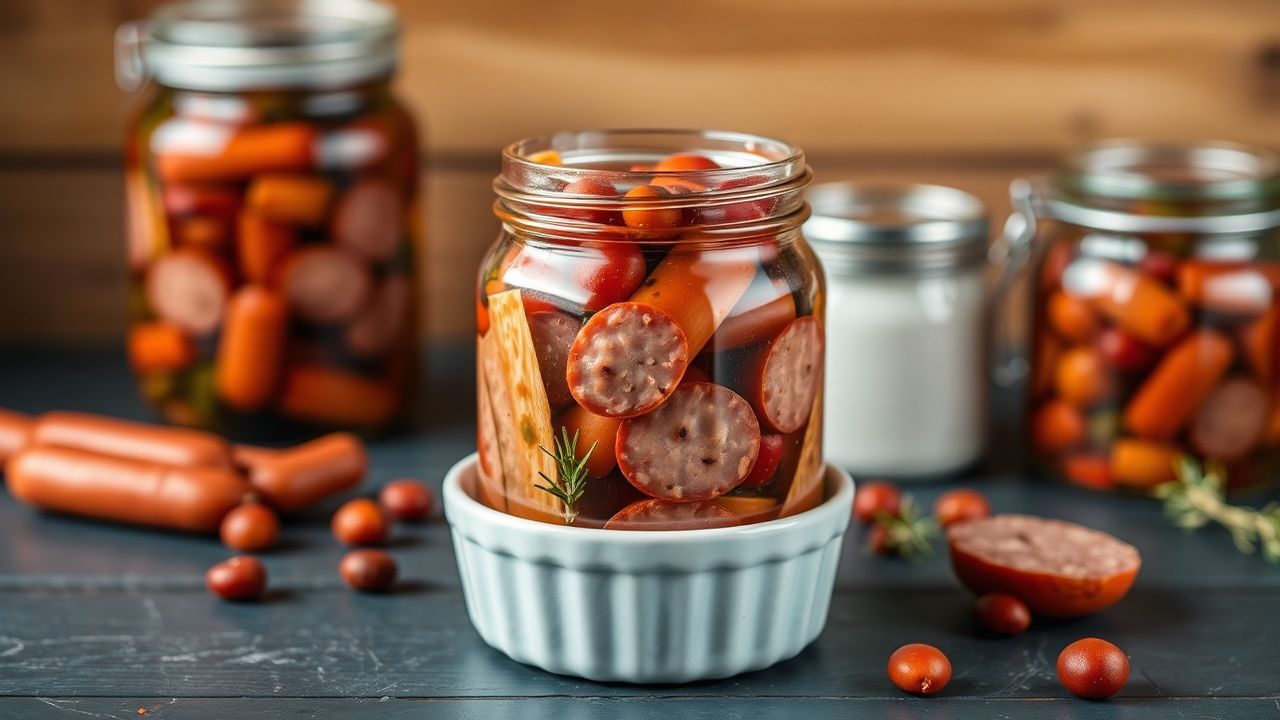

There is a precise, rewarding craft in turning cooked sausage into a bright, well-balanced jar of preserved flavor. Pickling draws on acid, salt, and spice to change texture and extend enjoyment while honoring traditional methods of pickling.
- Brine balance matters: acid, salt, and sugar control flavor and safety.
- Cook first, then pickle: always use fully cooked sausages for consistent texture.
- Timing builds depth: 4–7 days refrigerated yields the best tang.
- Store submerged: full brine coverage prevents drying and off-flavors.
Crafting the Perfect Brine for Bold Flavor Infusions
Start with a clear plan for your brine. The core components—acid, salt, and a small sweetener—set the baseline for every infusion you build.
Choose a vinegar with the profile you want. Apple cider vinegar gives fruit-forward tartness while white wine or distilled vinegar offers a cleaner snap; learn more about vinegar types on vinegar.
Essential Brine Components
Use a simple ratio to maintain consistent results: roughly 2 parts vinegar to 1 part water with salt and sugar adjusted to taste. This ratio keeps acidity high enough for flavor without overwhelming the sausage.
Add aromatics that complement pork or beef. Mustard seed, black peppercorns, bay leaves and crushed red pepper give structure; for a smoky twist, include smoked paprika sparingly.
Technique: How to Infuse Spices
Gently heat the vinegar, water, salt, sugar, and whole spices until the salt and sugar dissolve. Simmer only long enough to bloom the spices; avoid prolonged high heat to preserve volatile aromatics.
Allow the brine to cool slightly before pouring over warm but not piping-hot sausages. For technical reference on salinity and preservation, consult technical notes about brine.
Selecting and Preparing Sausages for Optimal Pickling
Pick the right sausage to suit pickling. Firm, coarsely textured smoked sausages such as kielbasa or well-seasoned bratwurst hold up best and deliver a robust mouthfeel; see background on sausage.
Always use fully cooked sausage. Par-cooked or raw links risk uneven texture when chilled in acidic brine. Pat sausages dry and optionally score their casings to allow the brine to penetrate more consistently.
Prep Steps Before Jarring
Sterilize jars and lids to reduce surface microbes. Hot-water sterilization or a dishwasher sanitize cycle works well when jars are handled hygienically.
Layering thin slices of red onion or a bay leaf in the jar can add secondary aromatics. Place sausages snugly to reduce trapped air and improve brine contact.
Mastering the Art of Timing and Temperature Control
Temperature control matters at two stages: while making the brine and during the initial cool-down of jars. Heat concentrates flavor; cooling controls texture and microbes.
Pour warm (not boiling) brine over the sausages and allow jars to reach room temperature before sealing. Warm brine extracts flavors effectively, while abrupt sealing of very hot jars can create inconsistent internal conditions.
How Long to Wait
Refrigerate jars immediately after sealing and chilling. A minimum of 48 hours yields noticeable tang, but four to seven days produces a pronounced, balanced flavor as acids and aromatics fully integrate.
Keep refrigerated storage below 40°F (4°C). For information on preservation concepts, reference basic principles of food preservation.
[NOTE: The next block is an expert tip that focuses on practical technique.]
[TIP]Expert Insight: For reliable results, measure brine components by weight rather than volume when possible. Use a 2:1 vinegar-to-water ratio, then adjust salt to 2% by weight of the total solution. This gives predictable acidity and mouthfeel.[/TIP]
Storing and Serving Your Tangy Pickled Sausages with Flair
Store pickled sausages in airtight glass jars, fully submerged in brine to avoid oxidized edges and texture loss. Keep them refrigerated and label jars with the pack date.
When serving, slice at a diagonal for a larger visual surface and ease of tasting. Pair with contrast elements like grainy mustard, sharp cheese, or crisp pickles to balance acidity.
Presentation Techniques
Arrange sliced sausages on a wooden board with small bowls of condiments. Use fresh herbs such as dill or thyme to add color and a herbaceous counterpoint.
Chill or bring to room temperature depending on the texture you prefer. Chilled slices keep a firmer bite, while slightly warmed pieces release more fat and aroma.
Recipe Details: Prep, Yield, and Timing
This section collects the recipe core: time, yield, and difficulty. Use it as a quick reference when planning batch size and storage.
The method suits 4–6 servings per pound of sausage and takes minimal active time; the longest interval is passive pickling while refrigerated for several days.
Prep and Cook Time
- Preparation: 15 minutes
- Brine simmering: 10 minutes
- Pickling time: Minimum 48 hours (preferably 4–7 days)
Yield & Difficulty
- Yield: 4–6 servings depending on sausage size
- Difficulty: Medium — attention to timing and balance needed
Ingredients
Gather these components before you begin. Measure carefully and stage items for an efficient workflow.
- 1 lb fully cooked smoked sausages (kielbasa or bratwurst recommended)
- 2 cups apple cider vinegar
- 1 cup water
- 2 tbsp kosher salt
- 1 tbsp granulated sugar
- 1 tbsp black peppercorns
- 1 tbsp mustard seeds
- 3 bay leaves
- 1 tsp crushed red pepper flakes
- Optional: 1 medium red onion, thinly sliced
- Fresh dill sprigs for garnish
Instructions
Follow these steps in order for consistent, safe results. Perform sanitation and temperature control at each stage.
- Prepare the brine: Combine apple cider vinegar, water, kosher salt, sugar, black peppercorns, mustard seeds, bay leaves, and crushed red pepper flakes. Gently heat until salt and sugar dissolve, then remove from heat and cool slightly.
- Prepare sausages: Pat sausages dry and score casings shallowly if desired to improve brine penetration.
- Jar the sausages: Place sausages into sterilized glass jars, layering with thin slices of red onion if using.
- Pour the brine: Pour warm (not boiling) brine over sausages, ensuring full submersion. Leave minimal headspace to reduce trapped air.
- Cool and seal: Let jars cool to room temperature before sealing. Then refrigerate promptly.
- Refrigerate: Chill for at least 48 hours; for deeper flavor, wait 4–7 days before serving.
- Serve: Slice diagonally, garnish with dill, and offer condiments like whole-grain mustard and horseradish.
Tips for Success
Small adjustments change the final profile meaningfully. Prefer small batches when experimenting with new spice blends or vinegars.
Use freshly ground whole spices for brighter aroma. Reduce crushed red pepper for lower heat and add a piece of smoked paprika for smokiness.
Serving Suggestions
Pickled sausage works well on charcuterie boards, in sandwiches, or diced into potato salad. Combine textures: crunchy pickles, creamy spreads, and crusty bread complement the tang.
Pair with a crisp lager or a bright white wine to balance acidity. For a casual plate, serve chilled with grainy mustard and sliced apples or pickled vegetables.
Nutrition (approx. per serving)
| Nutrient | Per Serving (approx.) |
|---|---|
| Calories | 210 kcal |
| Protein | 15 g |
| Carbohydrates | 4 g |
| Fat | 14 g |
FAQ
How does pickled sausage differ from fresh sausage?
Pickled sausage is cooked and then steeped in an acidic brine that alters flavor and texture. The process adds tang and extends refrigerated shelf life compared with fresh sausage.
Is it safe to pickle sausage at home?
Yes, when you follow safe practices: use sterilized jars, maintain proper acid ratios, and refrigerate promptly. Discard any jar that develops off-odors or sliminess.
How long should I wait before eating pickled sausage?
Minimum refrigeration time is 48 hours for a noticeable tang; four to seven days produces the richest, most balanced flavor as spices infuse fully.
Can I use raw sausage for pickling?
Do not use raw sausage unless you follow tested, pressure-canning or certified canning protocols. For straightforward home pickling, use fully cooked sausages to ensure safe texture and flavor.
Can I change the spice mix?
Absolutely. Experiment with herbs like dill, spices like coriander, or heat from jalapeño. Start with small changes and keep notes so you can repeat successful blends.
Embrace the process: measured brine, quality sausage, and patient refrigeration create bright, dependable results. Your jars will reward a careful approach with consistent flavor and a satisfying shelf of homemade tangy tradition.
See also: pickled sausage