
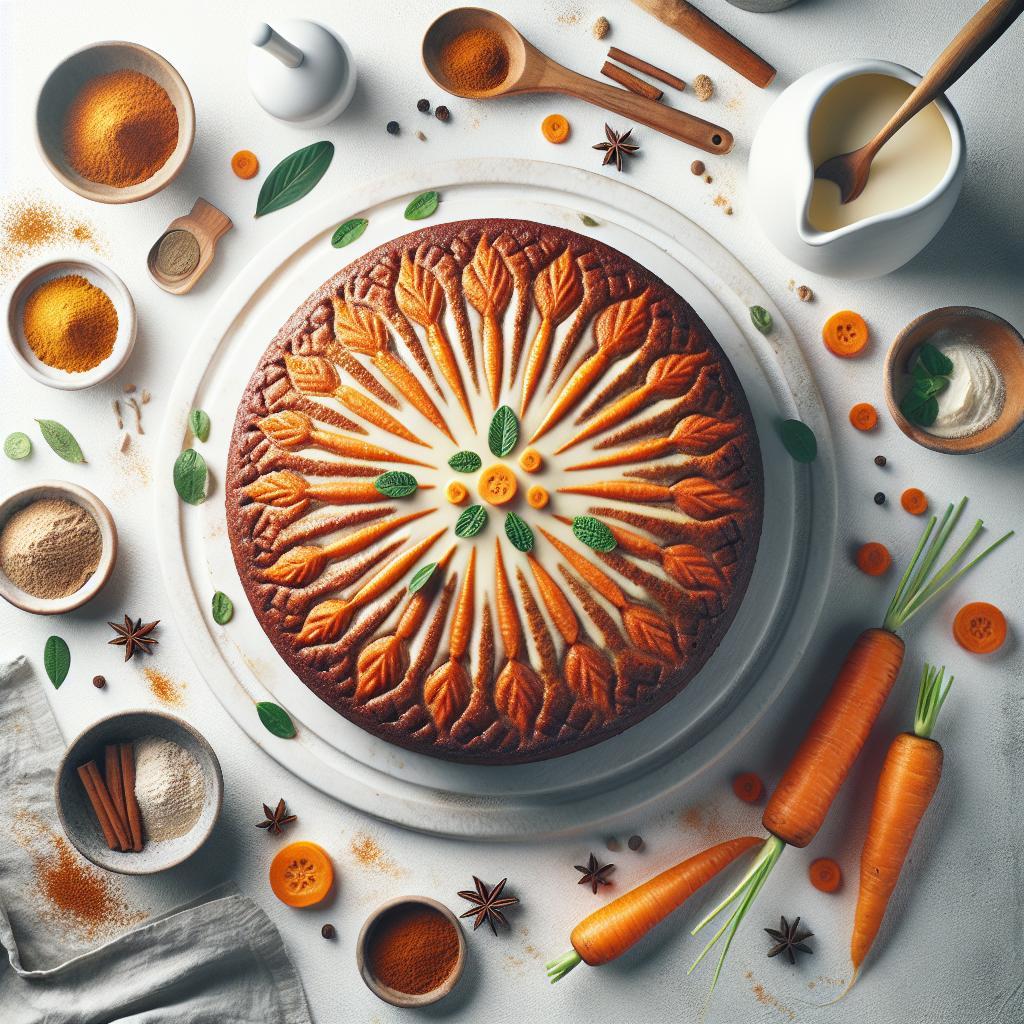

Ultimate Carrot Cake: Moist, Spiced, Perfectly Blissful
Few desserts combine comfort and technique as gracefully as a well-made carrot cake. This version focuses on a tender, moist crumb, warm spices, and a tangy cream cheese finish that balances sugar and texture.
- Moist crumb strategy: oil + crushed pineapple for lasting tenderness.
- Spice balance: cinnamon-led blend with nutmeg and ginger for depth.
- Assembly tips: cool fully before frosting to avoid weeping.
- Storage: refrigerate when frosted; freeze layers for long-term keeping.
Ingredients That Elevate Flavor and Texture
Every ingredient plays a clear role in structure, flavor, or shelf life. The recipe keeps ratios classic: two cups of flour, multiple sugars for complexity, and oil to preserve moisture through refrigeration.
Use freshly grated carrots for maximum juice and even distribution. When appropriate, include chopped, toasted nuts for contrast and a restrained amount of crushed pineapple to add moisture without masking spice.
- 2 cups all-purpose flour, sifted
- 1 1/2 teaspoons baking powder
- 1 teaspoon baking soda
- 1 1/2 teaspoons ground cinnamon
- 1/2 teaspoon ground nutmeg
- 1/4 teaspoon ground ginger
- 1/2 teaspoon fine salt
- 1 cup light brown sugar, packed
- 3/4 cup granulated sugar
- 3/4 cup vegetable oil
- 4 large eggs, room temperature
- 1 teaspoon pure vanilla extract
- 2 cups freshly grated carrots (about 4 large)
- 1/2 cup crushed pineapple, drained
- 1 cup chopped walnuts, toasted
- 1/2 cup shredded sweetened coconut (optional)
Prep, Timing, Yield
Plan roughly 20 minutes to prepare and about 40–45 minutes to bake; total time lands near an hour and five minutes. This makes the cake suitable for next-day serving when flavors meld.
Yield: 10–12 generous servings. Difficulty: Intermediate — good for home bakers who want a reliably impressive finish.
Prep and Cook Time
Preparation: 20 minutes. Keep tools and pans ready before starting to streamline the process.
Cooking: 40–45 minutes. Rotate pans midway if your oven has hot spots to promote even rise.
Instructions: Step-by-Step
Follow a disciplined mixing order to control gluten development and achieve a tender crumb. Start by combining dry spices with flour so the aromatics disperse evenly through the batter.
Use gentle folding once wet and dry components meet. Overmixing pulls gluten and yields a dense result; a light hand produces a delicate, tender texture.
- Preheat: Set oven to 350°F (175°C). Grease and line two 8-inch round pans with parchment for clean release.
- Dry mix: Whisk flour, baking powder, baking soda, cinnamon, nutmeg, ginger, and salt in a large bowl to ensure uniform spice distribution.
- Wet mix: In a separate bowl, combine brown sugar, granulated sugar, and oil. Add eggs one at a time, mixing until just combined; finish with vanilla.
- Add-ins: Fold in grated carrots and drained crushed pineapple to incorporate moisture and natural acidity without deflating the batter.
- Combine: Add the dry mix to the wet in two additions, folding gently until no streaks remain. Fold in walnuts and coconut if using.
- Bake: Divide batter between pans and bake 40–45 minutes. A toothpick should come out clean or with a few moist crumbs.
- Cool: Let pans rest 10 minutes on a rack, then invert and cool completely. Cool layers fully before applying frosting to avoid melt-through.
Small technique details matter: set eggs to room temperature to emulsify better, and drain pineapple thoroughly to avoid excess liquid. Toast nuts briefly to activate oils and boost aroma.
Chef’s Notes and Practical Tips
Oil produces a moister crumb than butter because it remains liquid at room temperature. This keeps slices soft even after refrigeration, which is common for cream-cheese-frosted cakes.
Baking soda reacts with acidic pineapple and brown sugar to aid lift; follow quantities closely. If you switch flours or sweeteners, expect texture changes and adjust baking time and leavening accordingly.
Allow layers to cool on racks to prevent trapped steam from making the crumb gummy. Wrap cooled layers before freezing to lock in moisture if you plan to store them long term.
Frosting and Presentation
Classic cream cheese frosting pairs acidity and fat, balancing the cake’s sweetness. Use full-fat cream cheese and unsalted butter for structure and flavor.
Whip cream cheese and butter until smooth before adding powdered sugar in small portions. Add vanilla and taste; the frosting should be tangy, not cloying.
- Frosting: 8 oz full-fat cream cheese, 1/2 cup unsalted butter, 3 cups powdered sugar, 1 tsp vanilla. Beat until silky.
- Assembly: Level layers, pipe a thin dam of frosting around the edges to hold filling, then finish with an even top coat. Chill briefly for clean slices.
Serving Suggestions and Pairings
Serve slices at room temperature for the cleanest flavor and texture. A brief 20–30 minute rest after refrigeration allows the cake to settle and flavors to open.
Pair with chai or medium-roast coffee to mirror the cake’s spice profile. For a lighter touch, present with a dollop of lightly whipped cream and a zest of orange for brightness.
Storage and Make-Ahead
Store fully frosted cake in the refrigerator, covered, for up to five days. Bring to room temperature 30–60 minutes before serving to let the fats soften and flavors bloom.
You can bake layers up to two months in the freezer. Wrap tightly in plastic and foil; thaw in the refrigerator overnight before unwrapping and frosting at room temperature.
Nutrition Snapshot
An average slice provides balanced energy from sugar and fat with modest protein from eggs and dairy. Adjust serving size to fit dietary goals and swap ingredients for targeted macronutrient changes.
| Nutrition per Serving | Calories | Protein | Carbs | Fat |
|---|---|---|---|---|
| Ultimate Carrot Cake slice | 350 kcal | 5 g | 46 g | 16 g |
Related Concepts and References
Understanding ingredient function helps you adapt the recipe with confidence. For technical background on the dessert type, see the carrot cake overview on Carrot cake.
For specifics on dairy and texture in frosting, review the entry about cream cheese at Cream cheese. If you use pineapple as the moistening agent, the fruit’s properties are summarized at Pineapple.
For nut choices and handling, the walnut article explains varieties and roasting benefits: Walnut. These resources help connect technique to ingredient science.
FAQ
How do I make the cake extra moist?
Use oil instead of butter and incorporate a small amount of crushed pineapple or applesauce to add water-soluble sugars and liquid. Do not overbake; check at the lower end of the time range and use a toothpick to confirm doneness.
Can I substitute nuts or omit them?
Yes. Pecans work like walnuts and roast similarly to deepen flavor. Omit nuts for a nut-free version or replace with seeds if allergy is a concern.
Why did my frosting separate or weep?
Frosting weeps when applied to warm cake or when frosting has softened too much. Chill the cake layers fully and beat frosting until smooth but not overly aerated; refrigerate briefly if needed before spreading.
Is there a gluten-free option?
Use a certified gluten-free all-purpose blend as a one-to-one swap. Expect a slightly different crumb; add an extra 1/2 teaspoon baking powder if the blend lacks leavening. Test bake a small pan first.
How far in advance can I bake this cake?
Bake layers one day ahead and store wrapped tightly at room temperature. For longer storage, freeze layers wrapped well and assemble after thawing to preserve peak texture.
With these focused techniques and ingredient choices, you can reliably produce a moist, spiced carrot cake that holds up to presentation and tasting. Adopt small tweaks—grating finesse, controlled mixing, and proper cooling—to elevate results each time.
See also: Carrot Cake