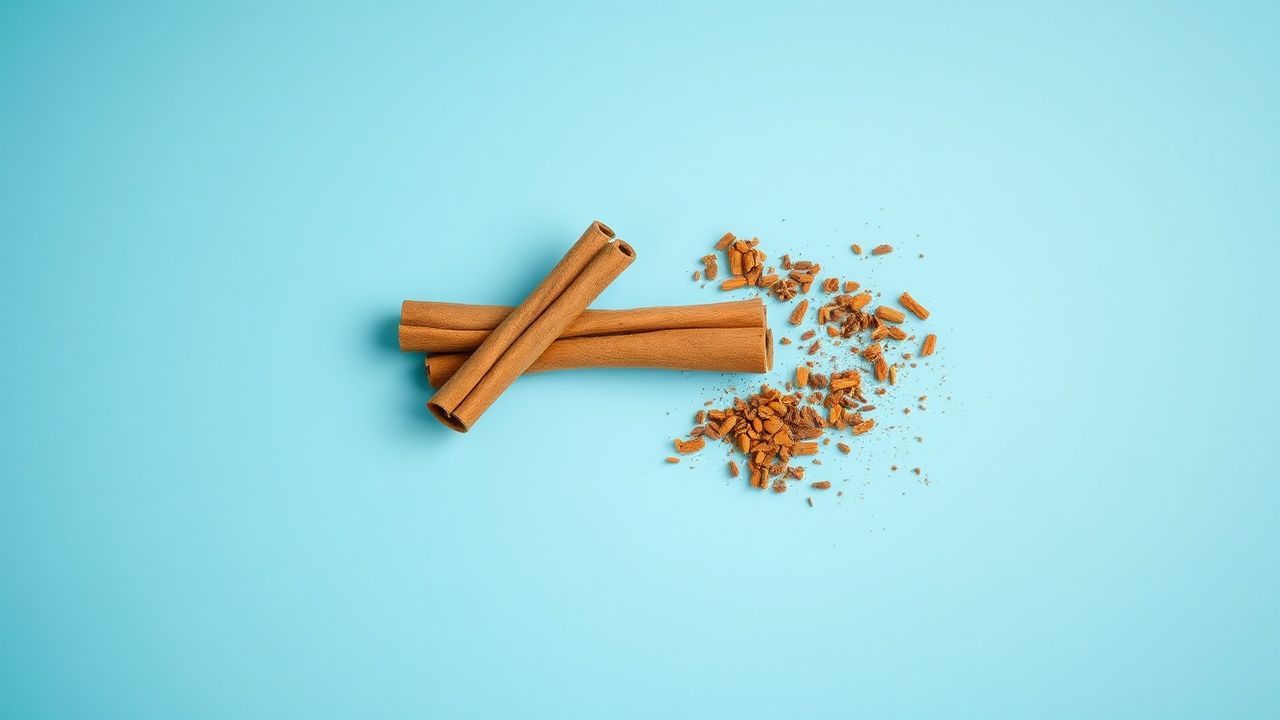

There is a concentrated well of aroma locked inside every cinnamon stick. When you grind sticks properly, you convert that concentrated oil and fragile aroma into a powder that performs at its peak in beverages, baked goods, and savory applications.
- Prep and Cook Time
- Yield
- Difficulty Level
- Ingredients
- Choosing the Ideal Grinder
- Mastering Drying and Preparing Cinnamon Sticks
- Step-by-Step Guide to Achieving Fine Cinnamon Powder
- Preserving Aroma and Freshness After Grinding Cinnamon
- Tips for Success
- Serving Suggestions
- Quick Nutritional Snapshot
- Common Troubleshooting
- FAQ
- Fresh grind wins: freshly ground powder contains more volatile oils than pre-ground jars.
- Tool matters: grinder type directly affects particle size and heat exposure.
- Dry first: low-temperature toasting stabilizes oils and eases grinding.
- Store smart: airtight, dark containers preserve scent and potency.
Prep and Cook Time
Preparation: 10 minutes for breaking sticks and setup. Keep an eye on piece size to save grinder strain.
Grinding/Drying: 25–30 minutes total, including gentle oven drying and short grinding pulses.
Total Time: About 40 minutes for a single small batch that yields the most vibrant powder.
Yield
About ¼ cup of freshly ground cinnamon powder from 5–6 whole cinnamon sticks, depending on stick thickness and species.
Adjust quantities proportionally. Small batches retain more aroma than bulk grinding.
Difficulty Level
Medium. The technique requires attention to drying, milling pulses, and sieving but does not need advanced equipment.
With basic tools and a little practice you will consistently produce fine, aromatic powder.
Ingredients
- 5–6 whole cinnamon sticks (choose Ceylon for delicate sweetness or cassia for a bolder profile).
- Optional: 1 teaspoon cornstarch to reduce clumping when storing.
Choosing the Ideal Grinder
Your grinder choice determines particle uniformity and heat exposure. Electric spice grinders and dedicated spice mills give the finest, most consistent powder when used in short pulses.
For tactile control, a heavy-duty mortar and pestle lets you release oils slowly and monitor texture. Avoid coffee grinders that retain oils from beans unless you clean them thoroughly.
Electric mill vs. manual crushing
An electric mill reduces effort and time, but over-grinding raises temperature. Use pulse mode in 10–15 second bursts and let the device rest between bursts to protect volatile oils.
A manual method yields rustic texture and fuller aroma extraction, since you control the force and duration. For fine powder, combine manual crushing with a short electric pulse.
Mastering Drying and Preparing Cinnamon Sticks
Moisture will cause clumping and speed aroma loss once ground. Drying removes residual moisture and slightly toasts the bark, intensifying sweet-spicy notes.
Spread broken pieces on a tray and dry at 175°F (80°C) for 12–18 minutes. Watch closely; the goal is warm, dry bark, not browning. Toasting times vary by stick thickness and initial moisture.
Why low heat?
Lower temperatures evaporate moisture while preserving delicate essential oils. Higher heat drives off aroma and risks scorch flavors.
After oven time, let pieces cool completely before grinding so condensation does not reintroduce moisture.
Step-by-Step Guide to Achieving Fine Cinnamon Powder
- Break into 1–2 inch pieces: Use kitchen scissors or a sturdy knife for manageable fragments.
- Dry-toast gently: Follow the oven instructions above to concentrate aroma and remove moisture.
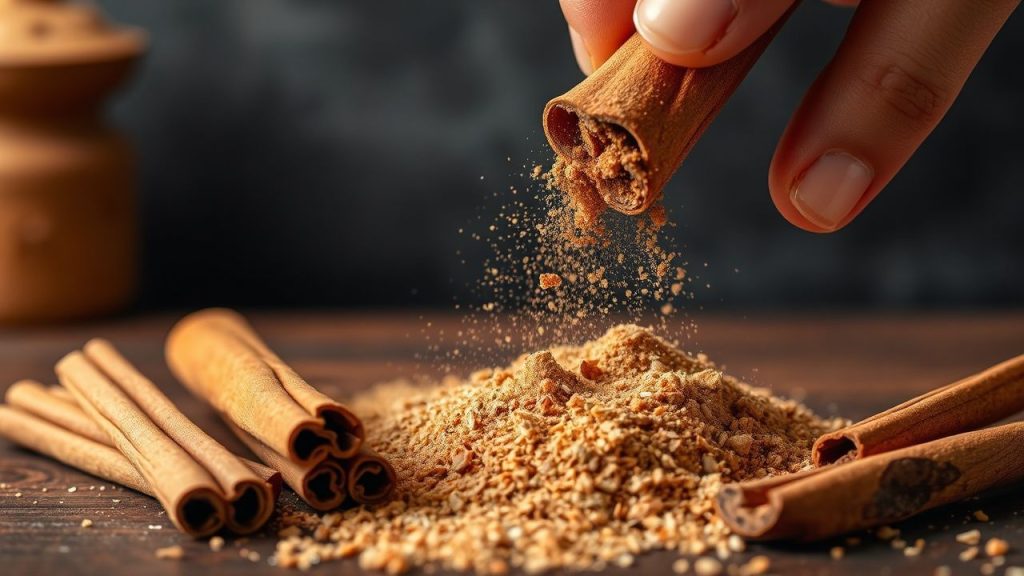
- Grind in small batches: Add a small portion to your grinder and pulse in 10–15 second bursts until fine.
- Sift and regrind: Use a fine sieve to separate powder from coarse fragments. Return coarse bits for a second pass.
- Anti-clump: Optionally mix 1 tsp cornstarch for about ¼ cup final powder to reduce caking in humid climates.
- Store immediately: Transfer to an airtight, opaque jar and seal while the powder is cold to minimize condensation.
Use short pulses to prevent heat buildup. If your grinder or blender becomes warm, pause for a minute and continue. This avoids volatile oil loss and preserves aroma.
After a first grind, check particle size with a spoon. For culinary uses like lattes and sauces, aim for a powder that dissolves or disperses easily. For finished baked goods, slightly coarser particles can add texture.
Preserving Aroma and Freshness After Grinding Cinnamon
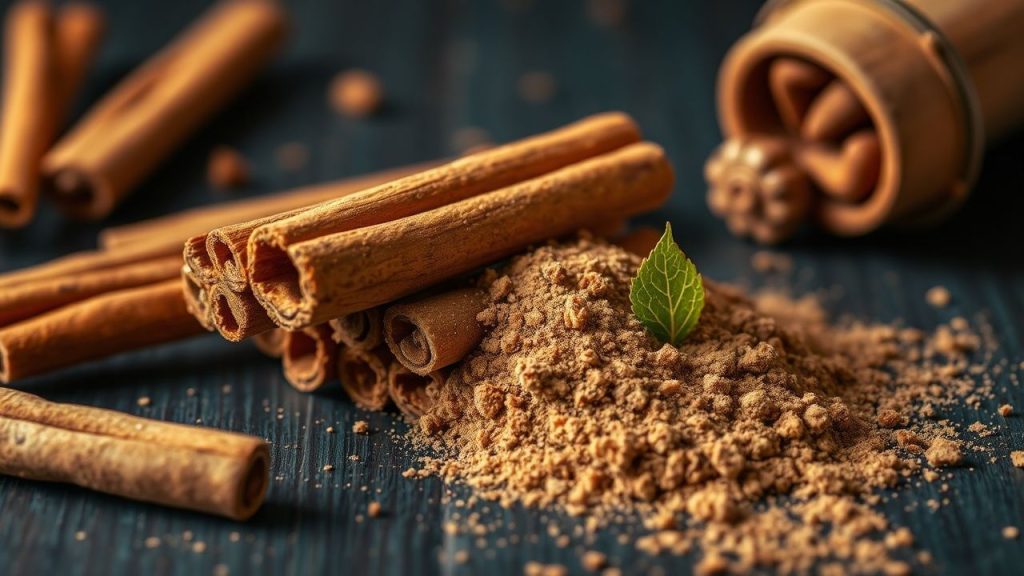
Ground cinnamon loses volatile oils quickly when exposed to air, light, and humidity. Place powder into an airtight container as soon as it is cool to reduce oxidation.
Store in a cool, dark cupboard away from heat sources. Choose glass jars with tight lids; amber or opaque containers add light protection and prolong scent longevity.
Long-term storage options
For longer retention, vacuum-sealed pouches or jars with oxygen absorbers slow aroma loss. Use the powder within 2–3 months for peak intensity.
If humidity is a problem, include a small food-safe desiccant packet in the jar. Avoid plastic lids that can transfer secondary odors over time.
Refer to our Spice Blending Guide for compatible blends and storage cross-compatibility.
Tips for Success
Choose the species: Ceylon cinnamon gives a sweet, delicate powder while cassia yields stronger, warmer notes. Match species to the recipe profile.
Grind only what you will use within a few months. Small-batch grinding preserves the highest aroma levels and reduces waste.
Clean your grinder after each use to avoid cross-flavor contamination. Wipe with a dry cloth and run a small amount of uncooked rice to absorb residual oils if needed.
When adding anti-clump agents like cornstarch, keep quantities minimal to avoid diluting flavor. A small pinch per quarter-cup strikes a good balance.
Serving Suggestions
Freshly ground cinnamon elevates many dishes. Sprinkle it over oatmeal, fold into pancake batter, stir into coffee or chai, or dust desserts for immediate aromatic impact.
Combine ground cinnamon with dehydrated citrus peel or star anise to create custom finishing blends. Use sparingly; freshly ground powder is more potent than aged commercial spice.
Savory uses
Cinnamon enhances Moroccan tagines, Indian garam masala, and Middle Eastern stews when used judiciously. Add toward the end of cooking to retain aromatic lift.
For mulled beverages, combine ground cinnamon with whole-stick infusions to layer warmth and texture. Adjust quantity based on the cinnamon type you select.
Quick Nutritional Snapshot
| Nutrient | Amount (per 1 tsp) |
|---|---|
| Calories | 6 |
| Protein | 0.1 g |
| Carbohydrates | 2 g |
| Fat | 0.03 g |
If you want deeper context on cinnamon varieties and history, see the general cinnamon overview and the historical spice trade entries for provenance and commerce background.
Common Troubleshooting
If your powder clumps, confirm the sticks were fully dry and add a tiny amount of cornstarch when storing. Clumping usually signals residual moisture or humidity in the storage area.
If the powder tastes dull, the solution is grinding a smaller batch and using it sooner. Aroma declines with surface area exposure; fine powder suffers fastest.
For recipe-specific texture, combine ground cinnamon with a pinch of another dried spice like nutmeg or citrus zest powder to round the profile. Adjust by teaspoon to taste.
FAQ
Q1: Why grind cinnamon sticks instead of using pre-ground cinnamon?
Freshly grinding releases volatile oils that degrade in pre-ground products. You gain brighter, more complex aroma and flavor that impacts both sweet and savory dishes.
Use freshly ground powder within 2–3 months for the best sensory result.
Q2: What tools produce the best texture for ground cinnamon?
Electric spice grinders give the finest, most uniform powder when pulsed. A quality mortar and pestle provides control and a fuller aroma through gradual release.
Match your tool to the desired texture: fine for beverages and smooth batters, coarser for visible speckle in baked goods.
Q3: How do I prevent my grinder from smelling like coffee or other spices?
Clean the grinder after each use. Wipe removable parts, run a short cycle with dry rice, and air dry thoroughly before storing or switching spices.
A dedicated spice grinder eliminates cross-contamination and preserves pure cinnamon character.
Q4: How long does freshly ground cinnamon remain flavorful?
At peak flavor for about 2–3 months when stored airtight, cool, and dark. Volatile oils begin dissipating immediately upon exposure to air.
Smaller, more frequent batches keep aroma highest and reduce waste.
Q5: Can I freeze ground cinnamon to extend shelf life?
Freezing can slow aroma loss, but condensation risk on thawing may cause clumping. If you freeze, vacuum-seal and thaw to room temperature before opening to minimize moisture ingress.
For most home cooks, airtight, dark storage at room temperature works well for the short-term freshness window.
Grinding cinnamon sticks is a straightforward way to elevate everyday recipes. With controlled drying, appropriate equipment, and proper storage, you can produce powder that outperforms commercial options in aroma and depth.
For practical storage methods, consult our internal Spice Storage Guide and the Spice Blending Guide for complementary pairing ideas and prolonged freshness techniques.
See also: ground cinnamon