
When chanterelles show true gill-like structures, experienced foragers ask two questions: is this a different species, and is it safe to eat? I write as a field mycologist and chef who has examined hundreds of Cantharellus specimens in the wild and kitchen. My aim here is to give clear, practical steps to identify chanterelles with unusual gill morphology and to protect your dinner and your health.
- Key takeaway: true gill appearance can be genetic, developmental, or environmental, and is uncommon in Cantharellus.
- Identification rule: combine gill structure with scent, flesh density, and habitat for reliable ID.
- Safety action: when morphology deviates, photograph, note habitat, and consult an expert sample before eating.
What are chanterelles?
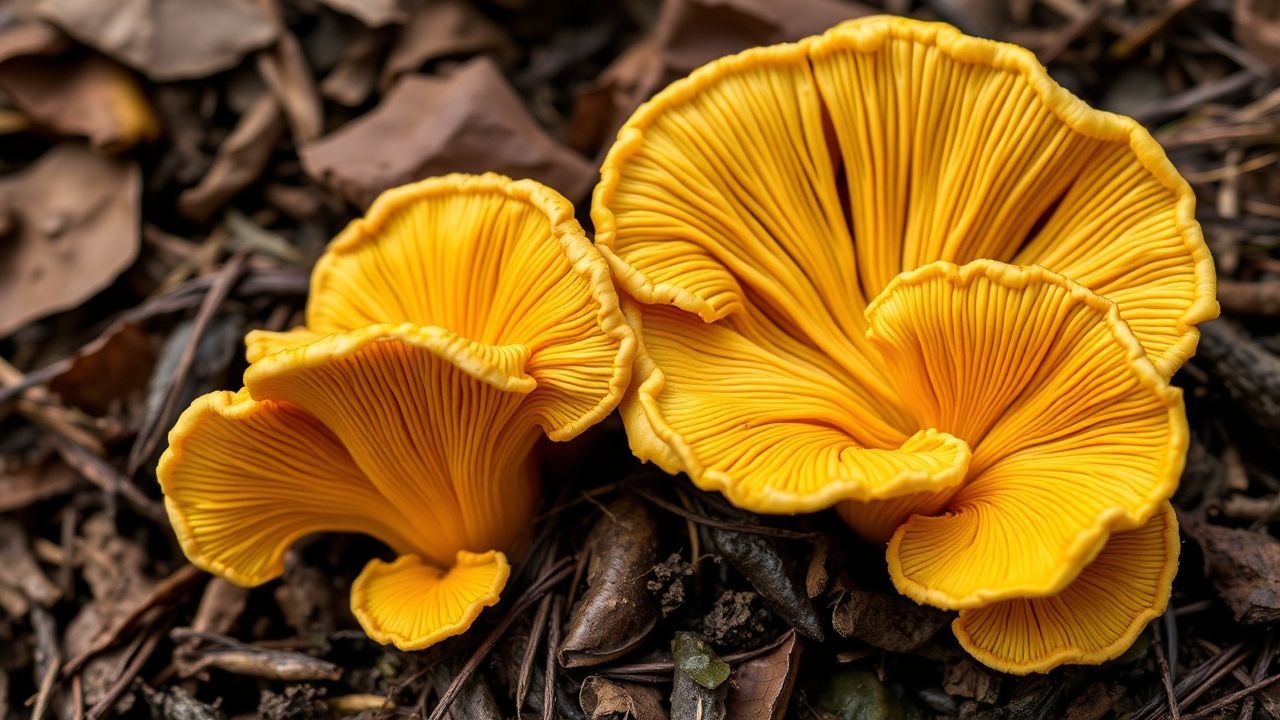
Chanterelles are fungi in the genus Cantharellus, prized for a fruity aroma and firm flesh. They typically feature decurrent, forked ridges rather than separate, knife-like gills.
Their culinary reputation rests on consistent texture and flavor, which stem from the species’ thick, meaty caps and distinctive growth habit near trees. For context on mushroom biology and terms used here, see the general mushroom entry.
Gill anatomy: false gills versus true gills
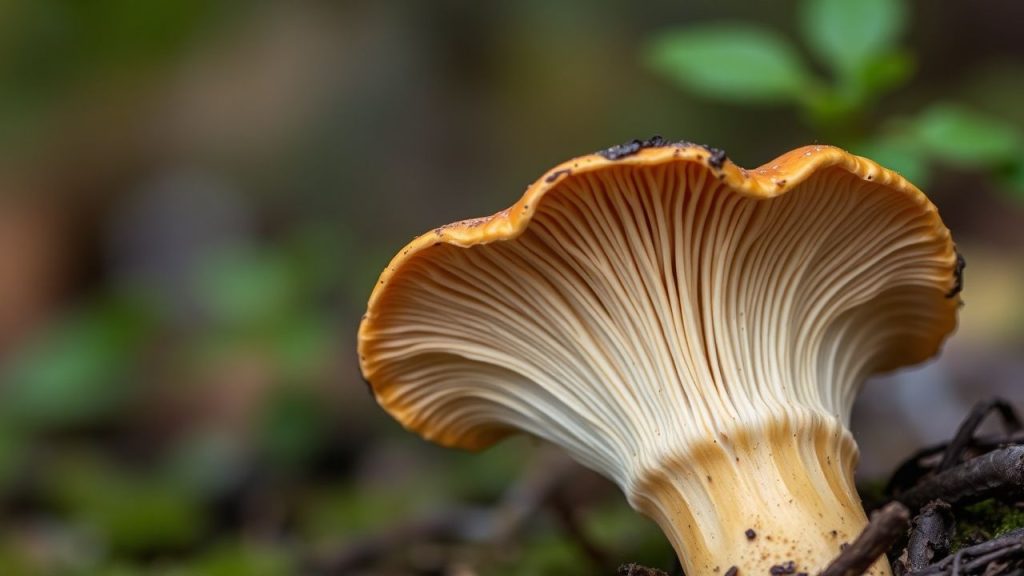
Mycology distinguishes between false gills (ridges) and true gills (lamellae). False gills are blunt, often fork, and run down the stem; true gills are thin, separate, and blade-like.
For a technical overview of lamellae and related structures, refer to the mycological article on gills (lamellae). That resource clarifies how gill structure affects spore release and taxonomy.
How gill-like ridges differ mechanically
False gills form from a thickened hymenophore and do not separate into individual blades; this affects texture and bruising patterns. In contrast, true gills tear and separate more easily, a useful test when handling specimens in the field.
Observe how the underside tears and how spores fall when you tap the cap gently. These simple manipulations help confirm whether you are dealing with ridges or lamellae.
Why some chanterelles develop gill-like structures
Several mechanisms can cause chanterelles to appear more gill-like. Genetic variation or hybridization within Cantharellus can produce specimens with atypical hymenophore development.
Environmental stress—such as unusual humidity, temperature swings, or substrate differences—can also alter growth patterns. Developmental anomalies in the fruiting body occasionally mimic lamellae but leave other chanterelle traits intact.
How to identify safely: a practical checklist
Do not rely on a single trait. Instead, use a checklist that combines macro traits: hymenophore type, scent, flesh thickness, spore print color, and habitat association with trees.
Step-by-step: note the cap color and shape, check whether ridges are forked and decurrent, smell for apricot-like notes, and test texture by pressing the cap. If any element conflicts with the standard chanterelle profile, pause and document.
After collecting images and notes, compare them to authoritative resources or a regional expert. A single unusual character—like slightly deeper grooves—does not prove danger if all other characteristics match Cantharellus.
Prep, recipe and cooking safety
Prep and Cook Time
Preparation: 15 minutes. Cooking: 10 minutes. Total time about 25 minutes. These small windows preserve chanterelles’ texture.
Yield and difficulty
Yield: Serves 4 as an appetizer or side. Difficulty: Medium; requires basic foraging knowledge and simple cooking technique.
Ingredients
- 2 cups fresh chanterelles, cleaned and trimmed
- 2 tablespoons unsalted butter
- 1 tablespoon olive oil
- 2 cloves garlic, finely minced
- 1 small shallot, finely diced
- Salt and freshly ground black pepper, to taste
- 1 teaspoon fresh thyme leaves
- 1 tablespoon fresh parsley, chopped for garnish
- 1 teaspoon lemon zest (optional, for brightness)
Instructions
Identify your chanterelles carefully before cooking. Confirm forked, decurrent ridges and the apricot-like scent; if gills look distinctly separate and blade-like, hold off and verify.
Clean the mushrooms gently with a soft brush or damp cloth; avoid soaking them. Heat butter and oil over medium until foaming, add shallots and garlic, then sauté chanterelles until golden, about 5–7 minutes.
Season with salt, pepper, and thyme. Finish with lemon zest and parsley, then serve on toasted bread, polenta, or pasta for balanced texture and flavor.
Foraging protocol and safety
Always cross-check field findings with a trusted regional guide or a certified mycologist. Note that lookalikes such as some Omphalotus species have true gills and can cause severe gastrointestinal symptoms.
When in doubt, discard the specimen or surrender it for expert verification. Conservatively limiting harvest protects both your health and local mushroom populations.
Chef’s notes and serving suggestions
Substitute shiitake or oyster mushrooms only if you accept that their texture and flavor differ; they possess true gills and will behave differently during cooking. Use lower heat and less stirring to retain chanterelles’ delicate form.
Serve sautéed chanterelles with polenta, risotto, or simply over buttered toast. A small sprinkle of hard cheese or microgreens complements their earthy, fruity notes without overpowering them.
| Nutrient | Per Serving |
|---|---|
| Calories | 90 |
| Protein | 2g |
| Carbohydrates | 5g |
| Fat | 7g |
Common misidentifications and how to avoid them
False chanterelles and jack-o’-lantern mushrooms are common confusers. They may share color and grow in similar habitats, but gill structure, scent, and spore print differ decisively.
Take a spore print on white paper and compare color. Chanterelles typically yield pale spores, while some gilled lookalikes have darker spore deposits; this diagnostic step reduces risky guesswork.
FAQ
Can chanterelles ever be poisonous?
True Cantharellus species that display typical ridges are edible and prized. However, similar-looking species with true gills can be toxic, so confirmation matters.
Always combine multiple characteristics—ridges, scent, flesh density, spore print, and habitat—before deeming a specimen safe to eat.
Does a gill-like appearance mean the mushroom is a hybrid?
Not necessarily. A gill-like appearance can result from genetics, environmental stress, or developmental anomalies. Hybridization is possible but rare and often region-specific.
Field data and, when available, microscopic spore analysis help distinguish hybrids from environmental variants. Collecting specimens for lab work clarifies uncertain cases.
What immediate steps should I take if I ate a misidentified mushroom?
If symptoms appear—nausea, vomiting, abdominal pain, or neurological signs—seek medical attention immediately and bring a sample of the mushroom. Timely hospital care improves outcomes for many mushroom poisonings.
Contact local poison control and provide photographs and notes about where and when the specimen was collected. Those details guide clinical response and public health advice.
How can I learn to identify chanterelles reliably?
Study regional field guides, attend guided forays, and join a mycological society to build hands-on experience. Repeated, supervised identification sharpens pattern recognition far faster than solo study.
Keep a dated photo log of your finds and compare them across seasons. Over time, you will recognize normal variation and spot genuine anomalies more quickly.
Where can I get authoritative confirmation?
Send detailed photos and, if allowed, a dried specimen to a certified local mycologist or university lab. Many mycological societies offer identification clinics during foraging seasons.
When submitting, include habitat notes, nearby tree species, and the collection date. These context points often prove pivotal in accurate identification.
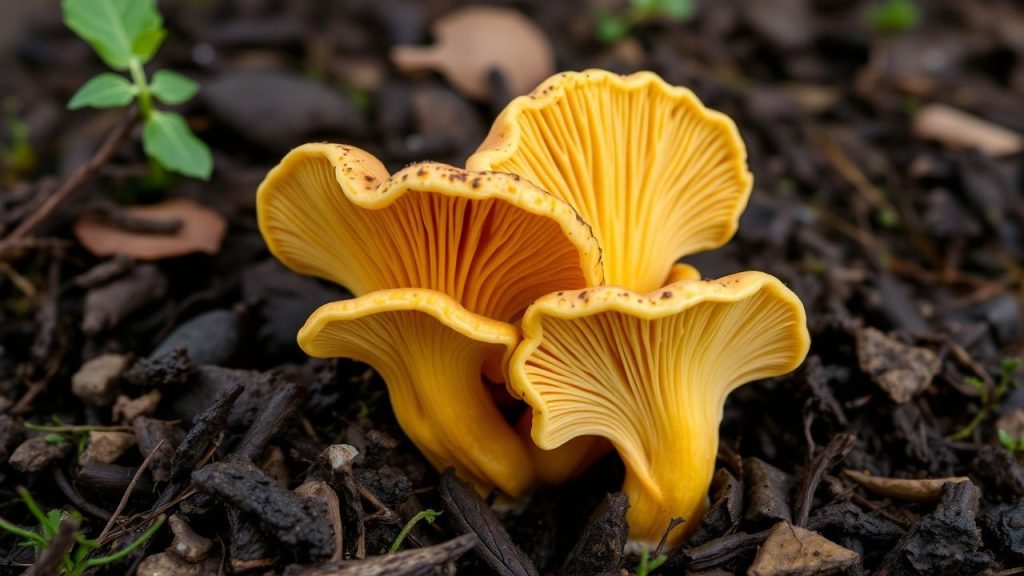
Final note: Chanterelles that show gill-like features create an opportunity to apply rigorous field methods and to learn more about fungal diversity. Use careful observation, documented records, and expert input to turn curiosity into safe harvests and memorable meals.
See also: chanterelles