
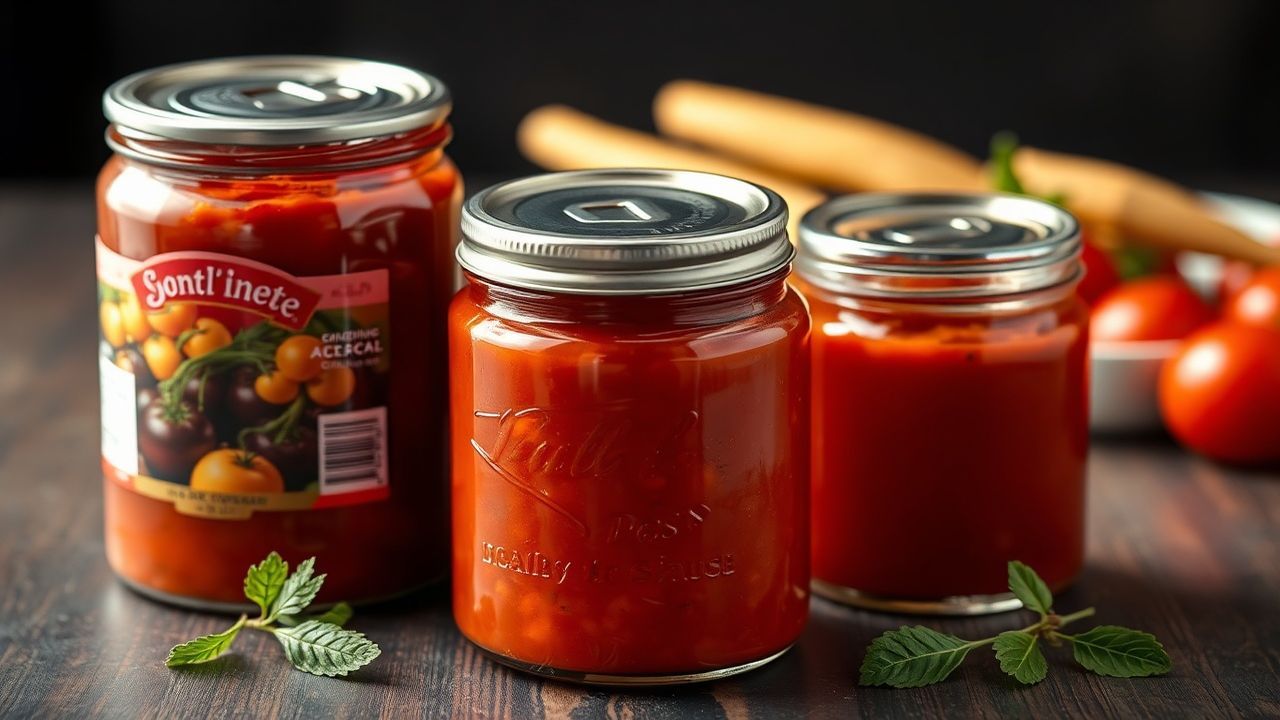

There is a recognizably off note when a sauce tastes “canned”: a slightly metallic tang, flatness, and a lingering preserved edge that steals the fresh character from tomatoes and herbs. Home cooks notice it immediately because the sauce lacks brightness and layered aromas that define a homemade pan sauce.
- Key idea: The “canned” note comes from preservatives, packaging interactions, and concentrated acidity.
- Quick fix: Balance acidity with sweetness, fat, or umami and finish with fresh herbs.
- Packaging matters: Material and liners can subtly influence flavor over storage time.
- Chef shortcut: Low, gentle simmering and a splash of wine or stock can restore complexity fast.
Why a Sauce Tastes “Canned”
Sauces acquire a canned character from a few predictable chemical and physical factors. Many store-bought bases come from concentrated or canned tomatoes that carry higher acidity and sometimes added stabilizers.
Preservatives and can-liners can add subtle off-notes, while long storage or heat exposure amplifies sharp acids and flattens delicate aromatics. For background on preservation, see canning (food preservation).
Common Causes
Understanding cause lets you target the fix. The canned flavor usually sits at the intersection of ingredient chemistry and packaging chemistry, not simply poor cooking.
Chefs and food scientists trace the flat, metallic, or overly tangy notes to identifiable inputs: acids, sulfites or other preservatives, and interactions with packaging. Read about the chemistry of acidity at pH (acidity).
Preservatives and Additives
Many commercial tomato products include citric acid, calcium chloride, or sulfites to stabilize color and prevent spoilage. These compounds preserve safety and shelf life, but they also sharpen the sensory profile in ways that taste unnatural when unsupported by fresh aromatics.
Sulfites, for example, control oxidation but can leave a sharp tang or mask subtle herbal notes. Learn more about sulfite chemistry on sulfite.
Packaging and Liners
Modern cans and jars use liners and coatings to prevent direct metal contact with acidic foods. Still, interactions occur over time; slight traces or interactions can alter aroma and mouthfeel.
Concerns about polymer liners or contaminants like Bisphenol A affect packaging choices. For context, see Bisphenol A and related packaging discussions.
Acidity, Concentration, and Cooking
High acidity concentrates during long cooking, becoming sharp and one-dimensional if not balanced by fat, sugar, or umami. Over-reduction also dulls volatile aromatics that give sauce freshness.
That reduction can transform bright tomato esters into a blunt acidity that reads “canned.” Adding balance early prevents the cooked base from becoming dominated by edge notes.
[TRY TIPS: Chef habit: taste at multiple stages, and add balancing agents slowly rather than all at the end.]
[NOTE: The bracketed line above is a stylistic aside and not a clickable element.]
Practical Fixes that Work
Apply targeted interventions to shift perception from flat and metallic to layered and fresh. Start with balancing acidity, then rebuild aroma and mouthfeel.
Use a combination of sweet (a pinch of sugar or sautéed carrot), fat (olive oil or butter), and umami to round the edges. Deglaze with wine or stock to add volatile complexity and lift the sauce.
Step-by-Step Remediation
1) Sauté aromatics (onion, garlic) until golden; their Maillard notes add natural sweetness. 2) Add the jarred sauce and simmer gently to let volatile preservatives blend and soften.
3) Balance acid with a controlled pinch of sugar or a small splash of cream. 4) Finish with fresh basil or parsley and a drizzle of good olive oil to restore herbaceous lift and silkiness.
Recipe: Quick Rescue Sauce
Below is a practical recipe that preserves convenience while erasing the canned edge. It uses a jarred base but treats it like a starting concentrate.
The method prioritizes aromatics, low simmering, and finishing layers that rebuild freshness and complexity.
Prep and Cook Time
Preparation Time: 10 minutes. Cooking Time: 25 minutes of gentle simmering to meld flavors without over-reduction.
These times allow aromatics to brown and the jarred sauce to relax and integrate additives into the flavor matrix. Gentle heat prevents the sauce from becoming too acidic or concentrated.
Yield
Serves 4 as a pasta sauce or 6 as a condiment for roasted vegetables. Volume depends on reduction; simmer until the sauce just thickens.
Transfer leftovers to airtight containers and cool quickly to preserve freshness. Freeze portions if you plan to keep the sauce longer than three days.
Difficulty Level
Easy to Medium. The technique needs only basic pan skills: sauté, simmer, and taste frequently to adjust balance.
Precise seasoning and timing deliver professional results, even with a store-bought base. Note that ingredient quality changes the degree of adjustment required.
Ingredients
1 jar (24 oz) store-bought tomato sauce (choose low-sodium, minimal additives when possible). Use fresh or high-quality canned tomatoes if you prefer fewer preservatives.
2 tbsp extra-virgin olive oil, 1 small onion (finely chopped), 3 cloves garlic (minced), 1 tsp sugar, 1 tsp dried oregano or 1 tbsp fresh herbs, fresh basil for garnish, salt and freshly ground black pepper, pinch of red pepper flakes (optional), ½ cup dry red wine or vegetable broth.
Instructions
1. Heat olive oil in a wide skillet over medium heat. Add finely chopped onion and sauté until translucent and lightly golden, about 5 minutes, stirring regularly.
2. Add minced garlic and cook 1 minute more until fragrant but not browned. Then pour in the jar of tomato sauce and stir to combine.
3. Simmer on low for 10 minutes to mellow preserved notes, stirring occasionally. Stir in sugar, dried oregano, and red pepper flakes if using.
4. Deglaze with red wine or vegetable broth, scraping the pan to lift caramelized bits. Season with salt and fresh pepper; cook 5 minutes more until slightly thickened.
5. Turn off heat and stir in a handful of fresh basil and a drizzle of olive oil. Serve immediately over pasta or use as a pizza base.
Chef’s Notes: Tips for Success
Choose wisely: Low-sodium, preservative-minimal sauces give you room to control balance. If possible, prefer jars over cans for less metallic interaction.
Cook low and slow: Gentle simmering lets harsh-preserving volatiles mellow and integrates flavors. Rapid boiling can concentrate acids and make the sauce sharper.
Add acidity & sweetness: A balanced small amount of sugar, a splash of balsamic vinegar, or lemon juice can brighten while controlling edge notes. Use acidity to lift, not to dominate.
Fresh herbs & aromatics: Fresh basil, parsley, or a sautéed carrot restore natural sweetness and counter processed flavors. Finish with olive oil to add body and gloss.
Serving Suggestions
Serve this revitalized sauce over freshly cooked pasta, spooned beside garlic-roasted vegetables, or as a base for homemade pizza. Finish with torn fresh basil and grated hard cheese for aroma and umami.
A small drizzle of extra virgin olive oil right before serving enhances mouthfeel and heightens perceived freshness. Pair with crusty bread to enjoy any pan juices.
Nutritional Snapshot
The following values are approximate per serving and depend on the exact jarred sauce used. Use them as a guideline when planning meals.
| Nutrient | Per Serving |
|---|---|
| Calories | 140 kcal |
| Protein | 3 g |
| Carbohydrates | 18 g |
| Fat | 7 g |
Further Reading and Science
For technical context on how tomatoes behave when processed, see the tomato entry on tomato. That page explains varietal differences and processing impacts.
To understand how acidity and preservation intersect, consult the pH overview at pH and food preservation pages like canning (food preservation). Those references clarify why some production choices affect taste.
FAQ
Q: What exactly causes the metallic note in some sauces?
The metallic perception often traces to acid interaction with metal or can-liners over long storage. Even with modern liners, slight interactions or trace metals can influence aroma.
Choosing glass jars or minimally processed sauces reduces the chance of metallic notes. Rapidly cooling and storing products properly also helps.
Q: Can I remove preservatives once they are in a jarred sauce?
You cannot chemically remove preservatives, but you can mask or rebalance their sensory impact. Simmering, fat, sugar, and umami will reduce perceived sharpness and integration issues.
Layering fresh aromatics and finishing with herbs or oil restores perceived freshness even when preservatives remain present.
Q: Are fresh tomatoes always better than canned for flavor?
Fresh tomatoes have brighter volatile aromatics that often read as fresher, but they vary seasonally. High-quality canned tomatoes picked and processed at peak ripeness can outperform out-of-season fresh tomatoes.
Use a mix: combine canned base with fresh herbs and aromatics to get reliability and brightness together.
Q: Does boiling a sauce longer make the canned taste worse?
Extended boiling concentrates acids and volatile compounds, which can make a canned edge more pronounced. Controlled, low simmering blends flavors more gracefully.
Monitor reduction and taste as you go. If the sauce sharpens, add balancing components—fat, sugar, or umami—rather than increasing heat.
Q: How do chefs preserve freshness when using jarred sauces professionally?
Pros add layers: aromatics, deglazing liquids, umami agents, and fresh herbs at the end. They also control reduction and finishing oil to deliver a fresh mouthfeel.
Technique matters: tasting at stages and adjusting incrementally gives predictable, restaurant-quality results from a convenience base.
With these principles, a jarred sauce becomes a flexible starting point rather than a limiting flavor. A few precise adjustments restore brightness, complexity, and the home-cooked soul of a sauce.
See also: canned taste