
Wild Greens Wonders: Elevate Your Grain Bowls Creatively
Wild greens bring concentrated flavor and dense nutrition to grain bowls. They add herbal, bitter, and tangy notes that change simple grains into layered, compelling dishes.
- Boost flavor: Foraged leaves add bitter, peppery, and citrusy notes that balance grains and roasted vegetables.
- Increase nutrition: Many wild greens supply vitamins A, C, K, iron, and omega-3s.
- Work fast: Quick sauté or raw toss methods preserve texture and color.
- Stay safe: Positive plant ID and environmental awareness keep foraging low-risk.
Introduction to Wild Greens
Foraging and using wild greens requires observational skill and culinary intent. When you add them to grain bowls, they expand the flavor map and deliver nutrients that typical lettuces lack.
Wild edible leaves like dandelion, purslane, nettles, and lamb’s quarters vary in texture and taste. Learn each leaf’s profile and match it to grains, dressings, and toppings for balance.
For practical background on harvesting methods and human use of wild plants, consult reputable references such as the page on foraging.
At a Glance: Prep Summary
Time: 25 minutes total including grain cooking and quick sauté. Yield: Serves 4. Skill: Medium—requires basic grain skills and plant familiarity.
This recipe centers on quinoa but adapts to farro, millet, or barley. Adjust liquid ratios and cooking times to fit your chosen grain.
Equipment and Ingredients
Use a medium saucepan for grains, a skillet for greens, and bowls for assembly. A microplane or fine zest grater elevates finishes.
Core ingredients: 1 cup quinoa, 2 cups vegetable broth, 1 cup mixed wild greens (dandelion, sorrel, chickweed, purslane), roasted chickpeas, carrot, red onion, toasted seeds, olive oil, apple cider vinegar, honey or maple syrup, salt, pepper, and lemon zest.
When specifying wild greens, refer to botanical descriptions for correct identification. For example, learn the appearance and habit of dandelion and purslane to avoid confusion with lookalikes.
Prep and Cook Time
Preparation: 15 minutes. Cooking: 10 minutes for grains and quick sauté. Total: 25 minutes.
Plan ahead by cooking grains and roasting chickpeas up to 48 hours before assembly. Store greens separately and toss them into the bowl just before serving to keep texture bright.
Step-by-Step Instructions
Step 1 — Cook quinoa: Bring 2 cups vegetable broth to a boil, add rinsed quinoa, reduce to a simmer, cover, and cook until liquid absorbs—about 12–15 minutes. Fluff with a fork and let cool slightly.
Step 2 — Prepare the dressing: Whisk olive oil, apple cider vinegar, honey, salt, and pepper until emulsified. Taste and adjust acidity or sweetness to balance bitter greens.
Step 3 — Sauté or wilt greens: Heat a tablespoon of olive oil over medium heat. Add wild greens and sauté 2–3 minutes just until bright and tender. Do not overcook; aim for texture retention.
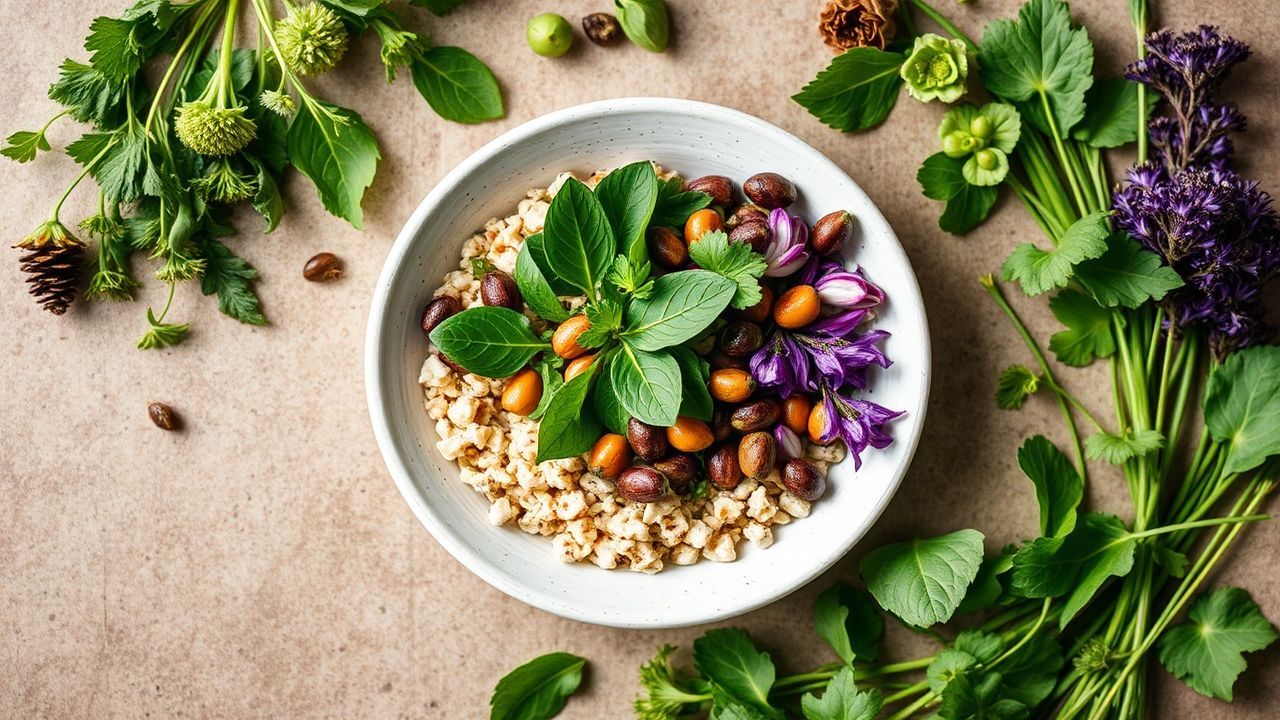
Step 4 — Assemble bowls: Divide quinoa among bowls, arrange greens, carrots, roasted chickpeas, red onion, and seeds in sections, and top with crumbled cheese or avocado for creaminess.
Step 5 — Finish: Drizzle dressing, toss lightly if desired, then garnish with lemon zest. Serve immediately for best texture contrast.
Ingredient Substitutions
If you avoid dairy, swap feta for avocado or a tahini drizzle to maintain creaminess. For grains, use farro for chew or millet for a lighter base.
To increase protein, add a poached egg, grilled chicken, or extra roasted chickpeas. Toasted nuts substitute for seeds to vary the crunch profile.
Chef’s Notes and Culinary Strategy
Choose young leaves for a milder taste and smaller veins. Older leaves lean bitter and need counterpoints—sweet roasted vegetables or creamy elements neutralize aggressive flavors.
Balance works on three axes: texture, flavor intensity, and temperature. Warm quinoa with chilled toppings keeps contrasts dynamic and satisfying.
For salt and fat calibration, add a pinch of salt to the dressing, then taste with a bite of greens and grain. This method prevents overdressing and preserves natural flavors.
Foraging Safety and Identification
Positive identification matters. Use field guides, local botanical resources, or join guided walks. Avoid harvesting plants from roadsides, industrial areas, or contaminated soils to limit pollutant exposure.
Many edible weeds have toxic lookalikes. For detailed botanical comparisons consult reliable references on common edible species and their traits. If you are unsure, do not harvest or consume the plant.
For technical background on a commonly foraged species, read about the stinging nettle at Urtica dioica (stinging nettle). Cook nettles before eating to neutralize stinging hairs and unlock nutrients.
Flavor Pairings and Composition
Match greens with complementary elements: bitter dandelion prefers sweet roasted squash; tangy sorrel pairs well with goat cheese or citrus; purslane benefits from sesame or citrus vinaigrette.
Use text contrast—crunchy seeds, creamy avocado, and chewy grains—to keep each mouthful interesting. Acidic dressings bind bitter notes and round the bowl’s profile.
Creative Topping Ideas
Try roasted sweet potato, quick-pickled onions (thinly sliced with salt and vinegar), toasted walnuts, or a soft-boiled egg. Each topping modifies texture and satiety differently.
For a Mediterranean angle, add olives, preserved lemon, and feta. For an Asian twist, use miso-ginger dressing and toasted sesame seeds to complement marine and umami notes.
Nutrition and Benefits
Wild greens contain concentrated micronutrients. They often supply vitamins A, C, and K alongside minerals like iron and calcium.
Purslane includes plant-sourced omega-3 fatty acids, while nettles can offer anti-inflammatory phytonutrients when properly prepared. Including wild greens diversifies micronutrient intake compared with conventional salad mixes.
| Nutrient | Per Serving |
|---|---|
| Calories | 398 kcal |
| Protein | 14 g |
| Carbohydrates | 45 g |
| Fat | 15 g |
Serving Suggestions
Serve bowls warm or room temperature for best texture contrast. Offer a small pitcher of extra dressing so each diner can adjust acidity to taste.
Pair with a crisp white wine, herbal iced tea, or sparkling water with lemon to refresh the palate between bites. Small garnishes like microgreens or edible flowers add visual lift.
Q&A
This section answers common practical questions about wild greens in grain bowls. Each response focuses on safety, preparation, and pairing logic.
For botanical learning and reliable species notes, reference the general category of leaf vegetables which lists cultivated and wild edible leaves and their culinary uses.
What are wild greens?
Wild greens are edible leaves and shoots that grow without cultivation. They include both familiar weeds and underused edible species found in fields, meadows, and disturbed soils.
They typically possess concentrated flavors—bitter, peppery, or tangy—and nutrient densities that often exceed those of standard salad greens.
How do I prepare them?
Wash wild greens thoroughly to remove grit and small insects. Use a quick sauté to soften fibrous leaves or toss tender leaves raw into a dressed grain bowl.
Light cooking reduces bitterness in tougher greens while preserving color and nutrients when timed correctly.
Which grains pair best?
Quinoa, farro, millet, and barley all pair well with wild greens. Quinoa offers a neutral, protein-rich base that lets assertive greens shine.
For background on quinoa cultivation and nutrition, consult the page on Quinoa.
Where can I learn to identify plants?
Attend local foraging workshops, consult regional field guides, and cross-check multiple identification sources before consuming wild plants. Start with common, easily identifiable species and progress slowly.
Local botanical gardens and extension services often offer identification resources and seasonal courses for safe learning.
FAQ
Are wild greens safe to eat?
Wild greens can be safe when correctly identified and harvested from clean environments. Avoid plants growing near roads, industrial sites, or areas treated with pesticides.
If you experience any adverse reaction after eating a wild plant, seek medical advice and preserve a sample for identification.
Can I use frozen wild greens?
Frozen wild greens work well in cooked preparations and soups but they lose crispness for raw-tossed bowls. Thaw and squeeze excess water before adding to hot grains.
Blanching before freezing preserves color and nutrients better than raw freezing for most species.
How much wild green should I use per bowl?
Use about 1 cup loosely packed cooked or raw greens per serving as a starting point. Adjust based on bitterness and personal preference.
Balance with at least one neutral grain portion and a creamy or sweet element to offset strong bitter notes.
Can children eat wild greens?
Introduce wild greens to children cautiously, starting with milder species and short tastes. Always verify identification and prepare leaves to reduce any potential irritants.
If introducing a new wild green, try a small cooked portion and monitor for digestive or allergic responses over 24 hours.
Where can I learn more?
Refer to reputable botanical and nutrition sources, local extension services, and certified foraging instructors. Practical, hands-on instruction accelerates safe, confident use of wild greens.
Enjoy experimenting with wild greens in grain bowls while maintaining safety and balance. Thoughtful foraging and pairing produce bowls that are flavorful, nutritious, and distinctly seasonal.
See also: wild greens