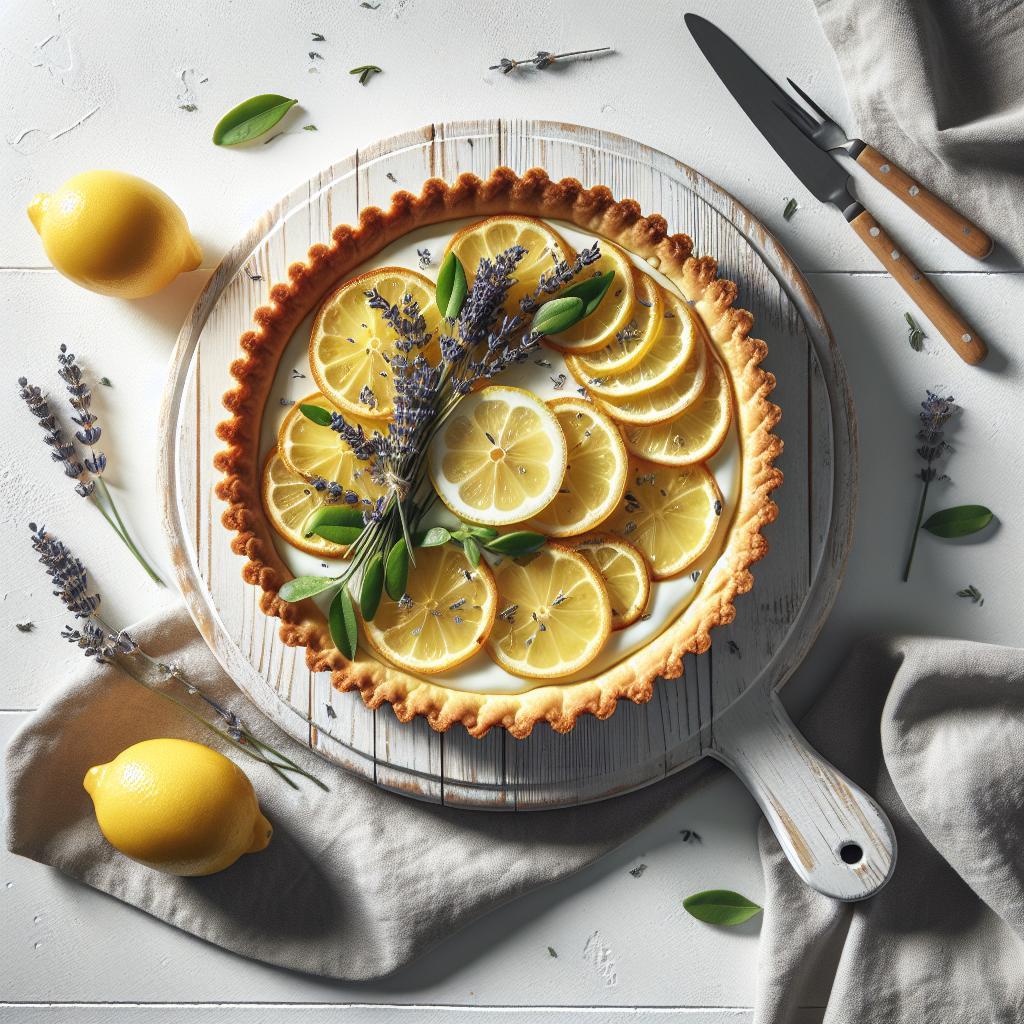

The lemon tart in this recipe pairs zesty citrus with a subtle lavender lift to deliver a reliable, restaurant-quality dessert at home. Follow the 10 pro tips below to achieve a flaky crust, silky custard, and clean slices every time.
- Consistent technique: Cold butter and short handling for a flaky crust.
- Low, slow baking: Gentle heat prevents a curdled custard.
- Controlled infusion: Warm—not boiling—cream pulls floral oil from lavender without bitterness.
- Resting time: Full refrigeration improves texture and sliceability.
Zesty Lemon Tart & Lavender Overview
The lemon tart balances bright acidity with floral aromatics; each element must be balanced to avoid one note overpowering the others. This overview focuses on the technical objectives: flaky pastry, smooth custard, and subtle lavender infusion.
Read each step slowly and prepare mise en place. For context on the primary fruit flavor used here, consult lemon, which explains the volatile oils that give fresh juice its lift.
Prep and Cook Time for Lemon Tart
Active preparation for this lemon tart is about 25 minutes: make the dough, zest and juice the lemons, and infuse the cream. Keep butter cold and measure precisely to protect butter pockets in the dough.
Hands-off chilling and cooling add roughly two hours. Blind-bake the shell for a total of 25 minutes and bake the filling at a lower temperature for 20–25 minutes until the center barely jiggles.
Yield
This lemon tart yields eight even slices using a standard 9-inch removable-bottom pan. Cutting with a hot, dry knife produces clean, professional wedges.
Store the finished lemon tart covered in the refrigerator for up to three days. Garnish just before service to preserve aroma and appearance.
Difficulty Level
Skill level: Medium. The recipe requires comfort with blind baking and tempering eggs to avoid curdling the lemon custard. Precision with temperature and timing raises the result from good to refined.
If you have basic pastry experience—rolling dough evenly and monitoring oven color—you will complete this lemon tart successfully. Use an oven thermometer if your appliance runs hot or cool.
Ingredients for Lemon Tart
Organize ingredients before starting. Mise en place prevents rushed mistakes and ensures the lemon tart assembly proceeds cleanly.
Use culinary-grade dried lavender and fresh lemons. For the floral component, see lavender to confirm culinary varieties and safe usage.
For the Tart Crust
1 1/4 cups all-purpose flour, 1/4 cup granulated sugar, 1/2 teaspoon salt, 1/2 cup cold cubed unsalted butter, 1 large egg yolk, 2 tablespoons ice water. Work quickly and chill the dough for at least one hour.
For a more tender shell, minimize handling. Keep the fat visible as pea-size bits so the baked crust develops layers and flake.
For the Lemon Lavender Filling
1 cup fresh lemon juice (4–5 medium lemons), 1 tablespoon culinary dried lavender, 1 1/4 cups sugar, 4 large eggs, 1/2 cup heavy cream, 1 tablespoon lemon zest. Zest before juicing to capture the essential oils.
Warm the cream with lavender and steep off heat, then strain. This step prevents tannic bitterness and yields a smooth, aromatic custard similar to classic custard.
For Garnish
Fresh lavender sprigs, thin lemon slices, and a dusting of powdered sugar for presentation. Consider a light honey drizzle or crushed pistachios for texture contrast at plating.
Only use edible lavender varieties. Ornamental lavender can carry pesticides and strong, unpleasant flavors; always verify culinary-grade sources before using in the lemon tart.
Instructions for Lemon Tart
Work in clear stages: make dough, chill, blind bake, infuse cream, mix filling, bake gently, then chill the finished tart. Short, focused steps avoid rushed errors and preserve texture.
Key temperatures: cold butter and ice water for the crust, warm (not boiling) cream for infusion, and a lower baking temperature for the filling to prevent curdling and cracks in the lemon tart surface.
- Make the crust: Combine flour, sugar, and salt. Cut in cold butter until the mix resembles coarse sand with pea-sized pieces.
- Add egg yolk and ice water a tablespoon at a time until the dough just holds. Form into a disk, wrap, and chill 1 hour.
- Roll and fit: Roll to 1/8 inch thickness and fit into a 9-inch removable-bottom pan. Trim edges and chill while the oven preheats to 350°F (175°C).
- Blind bake: Line shell with parchment and weights. Bake 15 minutes, remove weights, then bake 10 more minutes until set and lightly golden. Cool on a rack.
- Infuse lavender: Warm cream with lavender to just below simmer, remove from heat, and steep 15 minutes. Strain to remove buds.
- Make filling: Whisk eggs with sugar until smooth. Stir in lemon juice, lemon zest, and the strained infused cream.
- Bake filling: Pour into pre-baked shell and bake at 325°F (160°C) for 20–25 minutes until the center barely jiggles.
- Cool completely, then refrigerate at least 2 hours before slicing. Garnish with fresh lavender and lemon slices before serving.
Chef’s Notes & Tips for Success
Temperature control is the single most reliable way to avoid problems like a soggy base or curdled filling. Use a chilled bowl and keep butter cold while making the dough for the lemon tart.
Reserve a small amount of lemon zest for finishing: the fresh oil brightens the top layer and lifts aroma at the table.
Serving Suggestions for Lemon Tart
Serve chilled slices with lightly sweetened whipped cream to balance acidity. Fresh berries provide color and a complementary tart counterpoint that echoes the lemon note.
For adults, pair the lemon tart with a light, floral white wine or fragrant tea. For a textural finish, add a thin honey drizzle and a sprinkle of crushed nuts at plating.
Nutrition
Estimated nutrition per slice assumes eight equal slices of the lemon tart. Values change with substitutions such as a gluten-free crust or reduced sugar options.
Use the table below to guide portioning and to set guest expectations about calories and macronutrients.
| Nutrient | Per Serving |
|---|---|
| Calories | 320 kcal |
| Protein | 5 g |
| Carbs | 38 g |
| Fat | 15 g |
Insights and Practical Takeaways for Lemon Tart Bakers
Cold fat, minimal handling, and low oven temperatures produce the flake and silk that define a refined lemon tart. Each technique supports a measurable structural outcome: flake in the crust, smoothness in the filling, and clean edges at serving.
Test your oven with an oven thermometer and practice one or two elements—like blind baking—before assembling the whole tart. For more pastry basics and recipe variations, visit our pastry resources and lemon tart collection on the site.
Related internal reading: lemon tart recipes and pastry basics guide provide technique drills that strengthen final results.
FAQ
Can I use bottled lemon juice instead of fresh?
Fresh lemon juice gives brighter flavor because it contains volatile oils from the zest. Bottled juice lacks these aromatic oils and generally produces a flatter-tasting lemon tart.
How do I prevent the filling from cracking?
Bake the filling at a lower temperature and stop when the center still jiggles slightly. Rapid cooling and overbaking cause cracks; gentle, controlled heat creates a smooth surface.
Can I make this lemon tart gluten-free?
Yes. Use a tested gluten-free flour blend or an almond-based crust. Expect a slightly different texture—almond crusts will be crumblier and richer than an all-purpose flour shell.
Is lavender safe for everyone to eat?
Use culinary-grade lavender and keep quantities small. Some individuals may be sensitive to floral flavors, so label dishes at gatherings when serving herbs like lavender.
How far in advance can I prepare the tart?
Prepare up to one day ahead for best texture and flavor. Store the chilled lemon tart covered in the refrigerator and add garnish just before serving to preserve aroma and presentation.
Additional reference: for technique context see the Wikipedia article on tarts, which covers pastry types and common structures used in recipes like this lemon tart.
Recommended Reading:
- 9 Essential Couscous Secrets for Perfect Texture
- 9 Irresistible Air Fryer Crispy Chickpeas
- 5 Chef Secrets to Perfect Silky Garlic Sauce for Beef