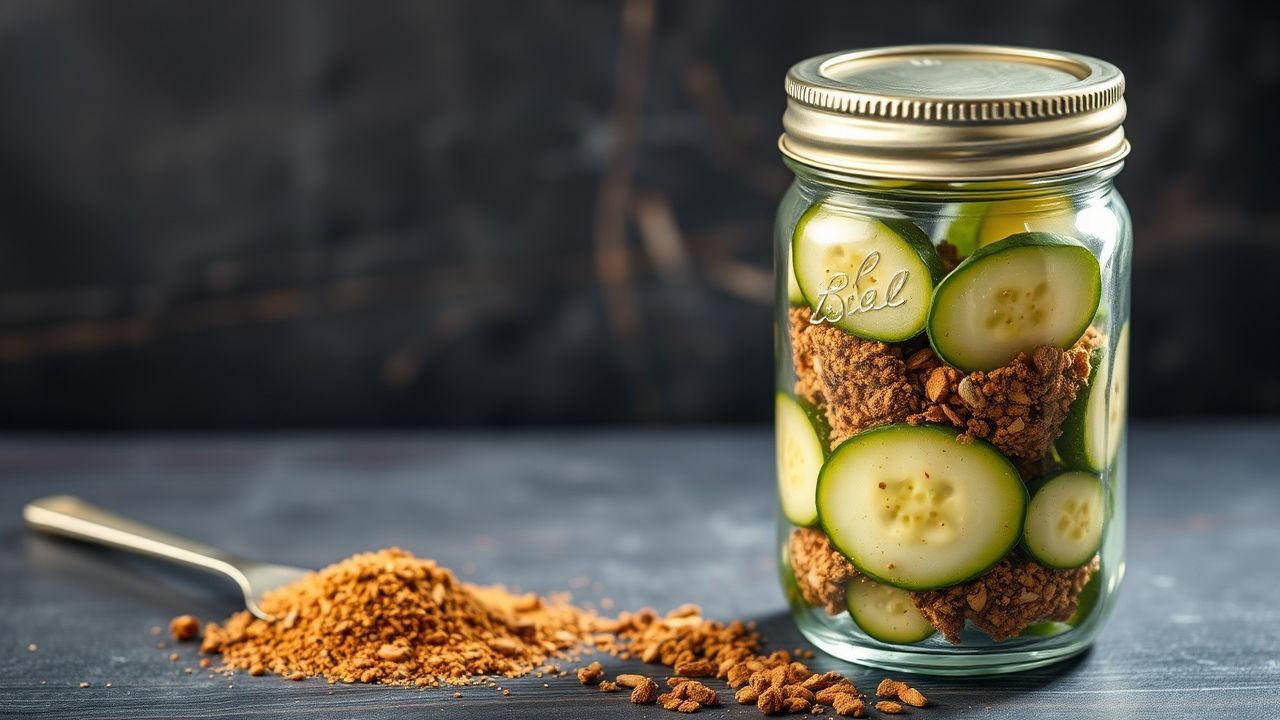

There’s an undeniable art to transforming cucumbers into crisp pickles, and the center of that transformation is a well-balanced pickling spice. Making your own blend gives you precise control over aroma, texture, and preservation behavior so every jar tastes intentional and balanced.
- Control flavor: Tailor heat, sweetness, and herb tones to the vegetable.
- Preserve crunch: Use tannin-rich leaves and whole spices to protect texture.
- Long shelf life: Properly toasted and stored whole spices stay potent for months.
- Flexible: One base mix adapts to cucumbers, carrots, beets and more.
Prep and Cook Time
Preparation: 10 minutes total. This includes measuring and arranging whole spices.
Toasting and cooling: 8 minutes. Toasting takes 3–5 minutes; allow extra time to cool for storage.
Yield
Approximately 1 cup of pickling spice blend when using the classic format below. That amount is enough for multiple quart jars of pickles.
Adjust scale easily: double or triple the recipe for pantry-ready jars. Store sealed in glass to retain volatile oils.
Difficulty Level
Easy for home cooks with basic spice-handling skills. The method requires attention when toasting to avoid bitterness.
Most beginners succeed on the first try by following the toasting times and keeping spices whole. The result is more forgiving than precise baking ratios.
Ingredients
Use whole spices for clarity in brine and gradual flavor release. Below is a balanced base; scale to taste.
- 2 tbsp coriander seeds — warm, citrusy base
- 1 tbsp dill seeds — signature dill lift
- 1 tbsp black peppercorns — background heat
- 1 tbsp mustard seeds (yellow or brown) — piquant snap
- 2 tsp crushed red pepper flakes — gentle kick
- 1 tbsp allspice berries — sweet, peppery depth
- 1 tsp whole cloves — floral warmth
- 1 tsp cinnamon chips or small broken stick pieces — subtle sweetness
- 1 bay leaf, crumbled — tannin-rich firmness
- 1 tsp dried thyme or oregano (optional) — herbaceous hint
Why whole spices matter
Whole spices retain essential oils longer than ground spices and release flavors steadily into a brine. They help keep the brine clear and the flavor profile layered over time.
For a short primer on pickling methods and history see pickling background. For botanical context on the main vegetable, review cucumber biology.
Instructions
1. Lightly toast whole spices. Heat a dry skillet over medium. Add coriander, dill, peppercorns, mustard seeds, allspice and cloves.
Toast 3–5 minutes until aromatic, shaking or stirring constantly to avoid scorching. Remove immediately to a cool dish to stop cooking.
2. Combine with remaining ingredients. In a heatproof bowl, mix the toasted spices with red pepper flakes, cinnamon pieces, crumbled bay leaf and optional dried herbs.
Stir to integrate oils and aromatic particles so each teaspoon of the blend is balanced. Keep the mix mostly whole for visual appeal and clean brine.
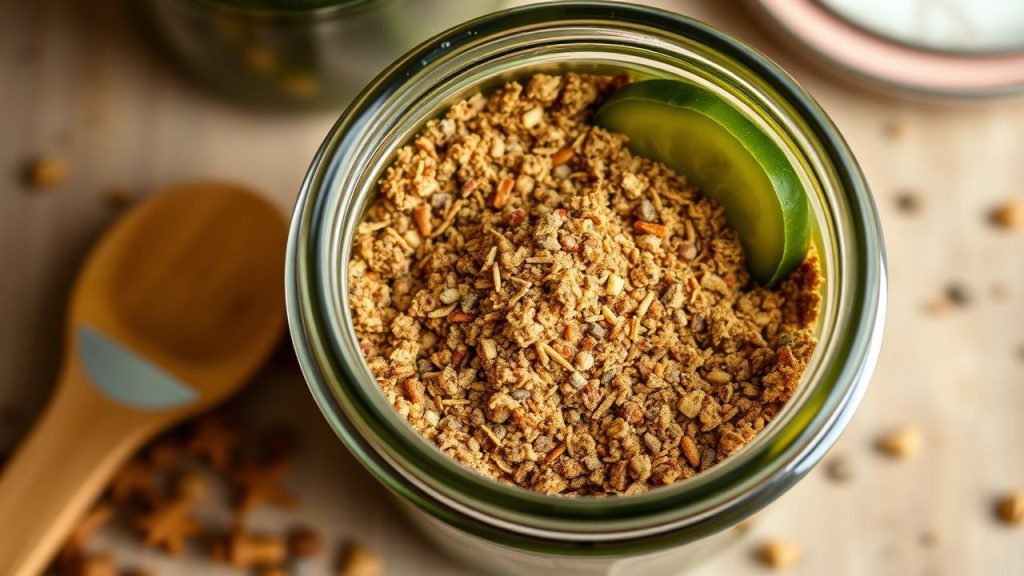
3. Cool and store. Cool the blend completely on a plate to avoid condensation in the jar. Transfer to a clean glass jar with a tight lid.
Label with the date and store in a cool, dark place. Use within 6–12 months for best potency; whole spices stay usable longer than ground ones.
Scaling and usage
Use about 1–2 tablespoons of this blend per quart of brine as a starting guideline. Adjust based on vegetable strength and personal taste.
For stronger aromatics, place a small muslin sachet of spice in the jar so you can remove it later without losing visual appeal.
Tips for Success: Sourcing Quality Spices and Preparing Homemade Mixes
Buy whole spices from reputable suppliers and note harvest or roast dates. Fresh, plump seeds deliver brighter aroma and better oil content for brines.
Store spices in amber or opaque glass to protect from light and heat. Avoid plastic containers for long-term storage; they can absorb volatile oils and flavors.
Light crushing just before use helps release aroma while preserving shelf life. A gentle press with a mortar and pestle is sufficient; do not grind to a fine powder.
Customizing Your Pickling Spice for Different Vegetables
Customization depends on the vegetable’s natural sugar and texture. Root vegetables tolerate warmer spices like cinnamon and allspice, while cucumbers benefit from dill emphasis.
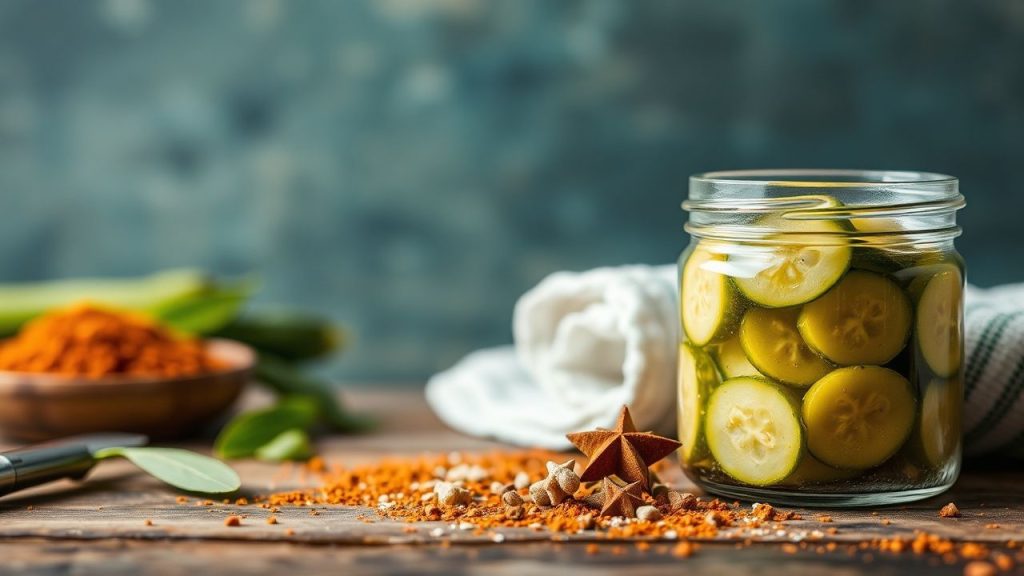
For Asian-style pickles, add star anise or more coriander. For sweeter profiles, increase cinnamon and allspice modestly to avoid overpowering acidity.
Experiment with fennel seeds, which add a licorice note that pairs well with carrots and beets. For a cleaner, herbal profile try extra dill or a small amount of dried tarragon.
For practical pickling technique guidance, consult our internal primer on how to achieve crisp pickles and the site overview at pickling basics.
Chef’s Notes
Make ahead: The blend stores well and often improves after a week as flavors marry. Label jars with dates and component ratios so you can replicate successful mixes.
Substitutions: If you lack a spice, use coriander, mustard and dill as a simple backbone. Allspice and cloves add rounded warmth but are optional for a cleaner profile.
Grinding: Keep most of the blend coarse. Powdered spice clouds brine and releases flavor too fast, which shortens balanced extraction during pickling.
Storage: Airtight glass jars in a cool pantry keep volatile oils stable. Refrigeration isn’t necessary and can draw moisture into the jar when opened frequently.
Serving Suggestions
Use whole spices and a sprig of fresh dill to garnish a pickle platter. Visual cues signal aroma and draw attention to texture.
Pair pickles with rich proteins and cheeses to provide acidity and crunch as a counterpoint. Small jars of pickled vegetables brighten sandwiches and charcuterie boards.
Nutritional Snapshot
The spice blend itself contributes minimal calories per serving but provides concentrated aroma compounds that enhance perceived flavor. Use sparingly for brining.
| Nutrient | Per 1 tsp Blend |
|---|---|
| Calories | 7 kcal |
| Protein | 0.3 g |
| Carbohydrates | 1.2 g |
| Fat | 0.3 g |
FAQ
Q1: Why make your own pickling spice?
Making your own blend lets you control heat, sweetness and herbal notes precisely. Fresh whole spices yield brighter aroma than pre-ground blends and allow tailored jars for different vegetables.
Also, you can avoid unwanted additives often present in commercial products. Custom blending gives you full transparency of components.
Q2: Which spices are essential in a classic mix?
Core ingredients include coriander, mustard, dill seed, bay leaf and black peppercorns. These provide citrusy, piquant and herbaceous layers typical of many pickles.
For botanical context and spice histories, see coriander and dill references.
Q3: How do spices influence crispness?
Spices themselves don’t create crunch but they support preservation choices that do. Tannin-rich items like bay leaf and grape leaves help inhibit enzymes that soften vegetable cell walls.
For a practical checklist on crispness by technique and salt balance review our guide at how to achieve crisp pickles.
Q4: Can this blend be used on other vegetables?
Yes. Carrots, beets, green beans and onions respond well to this base. Adjust warmer spices for root vegetables and emphasize dill for fresh cucumbers.
For complementary flavor information on a common seed used in pickling, see mustard seed.
In Retrospect
Crafting a pickling spice is a practical and creative step that elevates preserved vegetables. Treat the recipe as a framework; test small jars and refine ratios to match your palate.
Once you find a signature mix, document the ratios and storage date so you can reproduce the same crunch and flavor consistently. Happy pickling!
See also: pickling spice