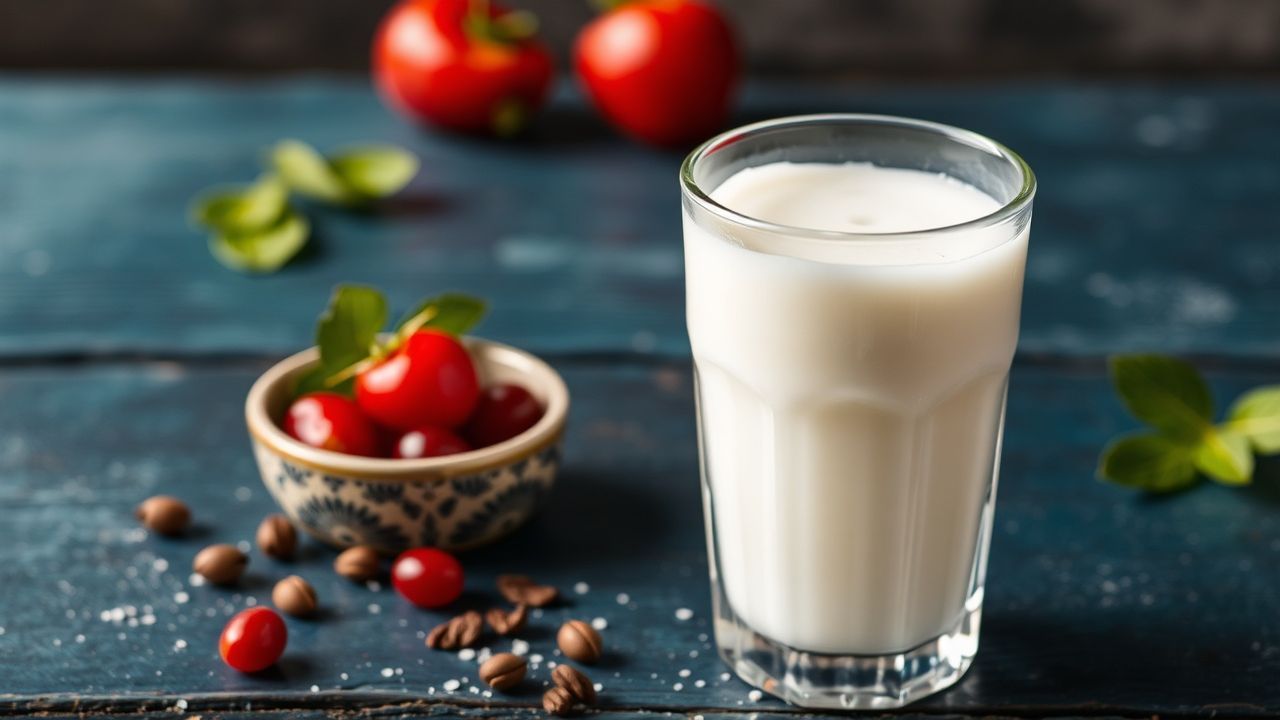

Ayran is a simple, salted yogurt drink from Anatolia that refreshes with a tangy, creamy profile and a light froth. This guide gives exact ratios, whisking technique, equipment choices, and serving notes so you can make consistent, authentic Ayran at home.
- Authentic ratio: 2 parts yogurt to 1 part water for classic texture.
- Whisk for froth: vigorous whisking or a quick shake produces the signature microfoam.
- Serve cold: chilled Ayran highlights acidity and keeps froth stable.
- Store briefly: refrigerate and consume within 24 hours for best mouthfeel.
Ayran Origins and Culinary Context
Ayran traces to fermented dairy traditions across Anatolia and Central Asia and sits as a daily refreshment in many Turkish households. The drink reflects techniques tied to traditional yogurt production and simple pantry seasoning.
Ayran complements grilled and savory dishes and functions as a palate cooler in meals from street food to family feasts. It pairs naturally with elements of Turkish cuisine, where acidity balances fat and chill counters heat.
Prep, Time and Yield for Ayran
Preparation takes about five active minutes; chilling is optional but recommended for texture. Use the classic 2:1 yogurt-to-water ratio for roughly four 250 ml servings from the quantities below.
Scale the recipe linearly for larger batches, but keep whisking time proportional to volume to preserve the froth. Short refrigeration (20 minutes) firms texture and improves mouthfeel.
Ingredients for Ayran
Use plain, full-fat, strained yogurt for the creamiest body; Greek- or Turkish-style yogurts perform best. Add cold, filtered water and a measured pinch of fine salt to balance tang without overwhelming the yogurt.
Optional aromatics include mint or a pinch of ground cumin. For a vegan Ayran-style drink, choose a thick plant-based yogurt and adjust water until the mouthfeel matches the dairy version.
- 3 cups plain Turkish-style yogurt (or full-fat Greek yogurt)
- 2 cups cold, filtered water
- 1 tsp fine sea salt (adjust to taste)
- Ice cubes (optional)
- Fresh mint or dried mint powder (optional garnish)
Equipment and Techniques for Ayran
Choose a balloon whisk, handheld electric whisk, or a sealed jar for shaking. A wide-mouthed jug or pitcher lets you whisk freely and form the microfoam that defines good Ayran.
Keep all components cold: chilled yogurt, cold water, and chilled equipment produce a brighter flavor and a more stable froth. Avoid room-warm ingredients, which flatten aeration and mute acidity.
Step-by-Step Instructions for Ayran
Place yogurt in the mixing vessel and whisk to loosen the curd. Add water slowly while whisking to maintain a smooth texture and prevent lumps.
Season with salt, then whisk vigorously for 2–3 minutes until a glossy, even froth forms. Transfer to a pitcher and refrigerate 20 minutes for a very cold serving, or serve immediately over ice if preferred.
- Combine: Put yogurt in a bowl or jug and whisk until smooth. Add cold water gradually while stirring to maintain an even texture.
- Salt and froth: Stir in the salt and whisk vigorously. The goal is a glossy, slightly aerated surface.
- Chill: Refrigerate the mixture for 20 minutes to sharpen flavors and set texture.
- Serve: Stir or shake briefly before pouring into tall glasses over ice if desired.
- Garnish: Top with mint or a dusting of dried mint for aroma and presentation.
Tips for Success with Ayran
Consistency control: For thicker Ayran, reduce water or begin with a higher-fat, strained yogurt. For a lighter mouthfeel, increase water and whisk longer to introduce more air.
Whisking technique: maintain a steady circular motion and finish with short bursts to form microfoam. Avoid over-dilution; the 2:1 ratio remains the baseline for authentic character.
Storage and Safety for Ayran
Store Ayran in a sealed container in the refrigerator and consume within 24 hours for optimal texture and probiotic quality. Natural separation may occur; a gentle whisk before serving restores uniformity without altering flavor.
Discard Ayran if it develops an off smell, visible discoloration, or an unusually sour taste beyond normal yogurt tang. Always keep cold storage below 4°C to limit microbial changes.
Serving Suggestions and Pairings for Ayran
Ayran pairs exceptionally well with grilled meats, rice pilafs, and savory pastries. It balances heat and fat, making it a traditional companion to kebabs and spiced stews.
Serve Ayran in tall glasses or rustic clay cups and pair with crunchy flatbreads or light meze plates for contrast. Try it alongside grilled kebab or a simple rice pilaf to showcase the drink’s cooling function.
Flavor Variations for Ayran
Add a pinch of ground cumin or black pepper for a warm accent, or blend in thin cucumber slices to make a chilled, tzatziki-like variation. Dill and parsley also integrate well as fresh herb options.
For vegan adaptations, use thick plant-based yogurts and test water ratios in small batches. Expect textural differences; compensate with colder temperatures and longer whisking to increase aeration.
Nutritional Information (Per Serving) for Ayran
An average 250 ml serving of classic Ayran supplies protein, calcium, and hydration at a modest calorie level. Full-fat yogurt increases calories but improves mouthfeel and froth stability.
Approximate per-serving breakdown for 250 ml, made with full-fat yogurt:
| Nutrient | Amount |
|---|---|
| Calories | 90 kcal |
| Protein | 5 g |
| Carbohydrates | 6 g |
| Fat | 4 g |
Why This Ayran Method Works
Whisking introduces tiny air bubbles that interrupt the yogurt matrix and produce a silky mouthfeel. Salt rounds the acidity and amplifies perceived creaminess, a common dairy technique used widely.
The 2:1 ratio reflects traditional balance between yogurt thickness and dilution. Small adjustments fine-tune texture, but large departures change the drink’s identity and mouthfeel.
Further Reading and Context About Ayran
For cultural and historical context, consult primary references on Ayran and on fermented dairy traditions. These sources outline regional variants and historical distribution across Eurasia.
To explore related food traditions that explain pairing behavior, read about fermented foods and grilled meats, including the role of condiments and cooling beverages in complementing spicy or fatty mains.
FAQ
What is the best yogurt to use for Ayran?
Use plain, high-fat, strained yogurt for optimal texture and flavor. Strained yogurts retain body without excess whey, producing a creamier, more stable drink.
Low-fat yogurts work in a pinch but need less water and more vigorous whisking to approach the traditional mouthfeel.
How do I get a stable froth on top of Ayran?
Whisk vigorously for 2–3 minutes with a balloon whisk or handheld mixer, using cold ingredients and chilled equipment. A final shake in a sealed bottle can increase surface froth just before serving.
Metal bowls and cold vessels help trap tiny air bubbles and keep the froth intact longer.
Can I make Ayran ahead of time?
Make Ayran up to 24 hours ahead and keep it refrigerated in a sealed container. Stir gently before serving to recombine any separation.
Freshly whisked Ayran has the best froth and texture, so briefly re-whisk if you prepare it earlier than serving time.
How do I adapt Ayran for a vegan diet?
Choose thick plant-based yogurts such as soy or coconut varieties and test water ratios in small batches. Expect differences in tang and mouthfeel; compensate by chilling and whisking longer to build aeration.
Flavor balance may require a touch more salt and a squeeze of lemon to mimic yogurt tartness if needed.
What are common regional variations of Ayran?
Some regions add herbs, spices, or even a dash of carbonated water for effervescence. Cucumber blends create a tzatziki-like variation that can serve as a cold soup or dip.
Local yogurt strains and salt types shape micro-variations, but the beverage family resemblance stays consistent across regions.
See also: Creamy Greek Tzatziki
See also: Ayran